Một dự án của Lê Mai A Lê Mai project · go to lemai.com.vn

Tansy (blue)

Ngải Tansy xanh

Tanacetum annuum

Moroccan tansy

Asteraceae · Phần trên mặt đất · Aerial parts · Steam-distilled

Blue tansy essential oil is steam-distilled from the aerial parts of Tanacetum annuum, an annual Moroccan member of the daisy family. Chamazulene gives it a deep blue color, and its main components are sabinene and camphor, with a sweet, herbal, lightly camphoraceous scent. It is a different plant from common tansy, so check the botanical name; it is popular in skin care for sensitive skin.

Updated 4 Nov 2026 · Lê Mai Team
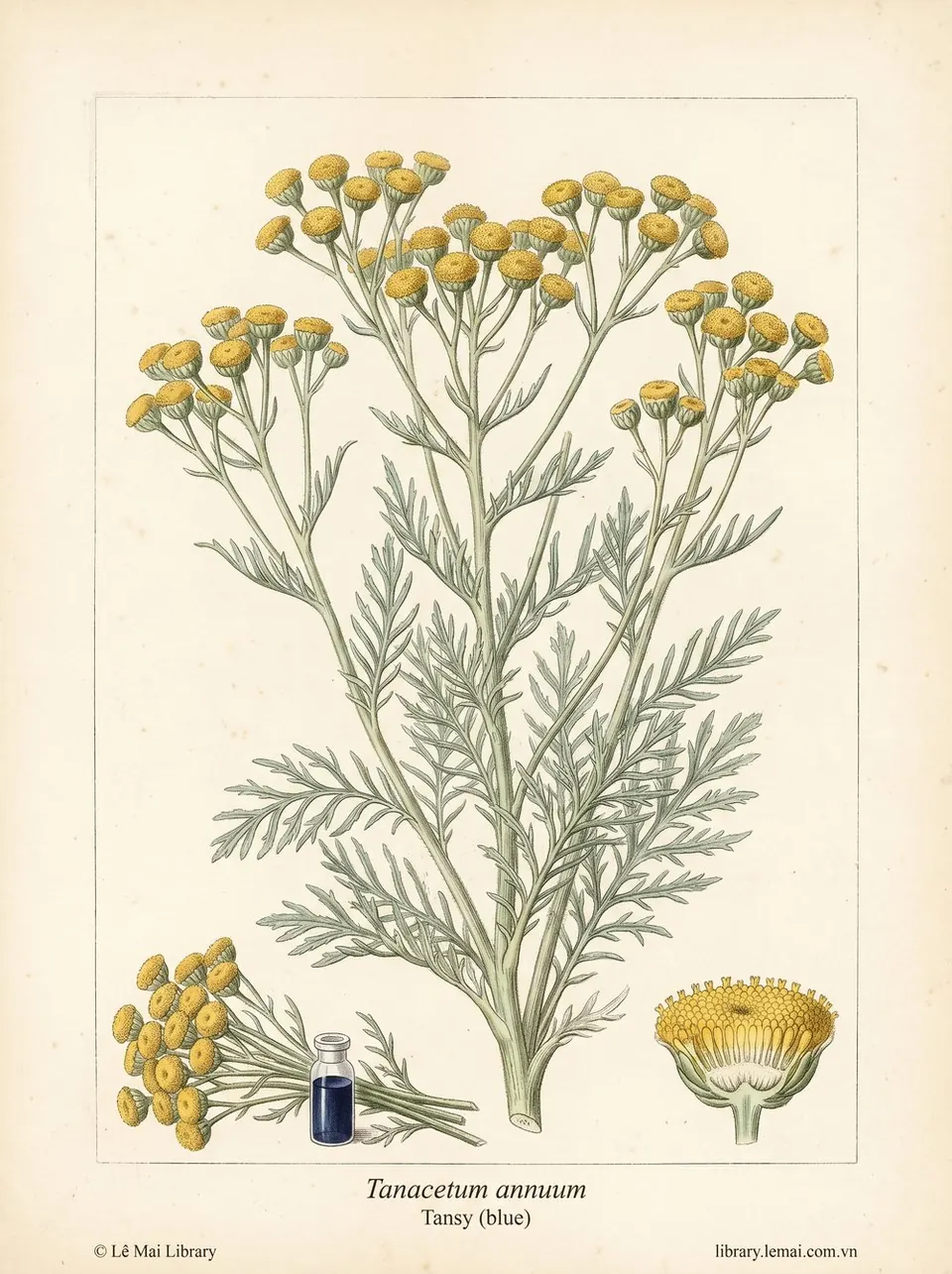
Botanical illustration of Tanacetum annuum; aerial parts used to extract Tansy (blue) essential oil
Tansy (blue) essential oil, extracted from the aerial parts of Tanacetum annuum. Botanical illustration, Lê Mai Library.

Safety

Skin sensitization low · Chamazulene-rich

Chamazulene gives a characteristic deep blue color. Different safety from common tansy, no significant thujone.

Low skin sensitization risk.

Recommended dermal maximum 16 percent.

No clear pregnancy data.


Usage guidelines

Maximum dermal level
16 percent
Color
Deep blue (chamazulene)
Storage
Dark, sealed, refrigerated

Chemistry

Volatile constituents
Sabinene20.0 – 35.0 %
Camphor10.0 – 20.0 %
Chamazulene5.0 – 15.0 %
p-Cymene5.0 – 12.0 %
α-Pinene2.0 – 8.0 %

Botanical source

Tanacetum annuum is an annual Moroccan tansy, not common tansy.

Main production: Morocco.

Family Asteraceae.


Origin, season and context

Origins

Notes

Chamazulene is also found in German chamomile and blue yarrow. In cosmetics, blue tansy is popular in sensitive skin care.

Safer than common tansy. Do not confuse, verify botanical name.