Một dự án của Lê Mai A Lê Mai project · go to lemai.com.vn

Myrtle (honey)

Sim mật ong

Melaleuca teretifolia

Honey myrtle

Myrtaceae · Lá · Leaves · Steam-distilled

Honey myrtle essential oil is steam-distilled from the leaves of Melaleuca teretifolia, a Western Australian shrub in the myrtle family, produced commercially only since the 1990s. It smells strongly citrusy, honeyed and fresh; its main components are geranial (about 45 to 55%) and neral (about 30 to 40%). Because it is very rich in citral, use it on skin only at low concentrations and store it sealed to prevent oxidation.

Updated 6 Nov 2026 · Lê Mai Team
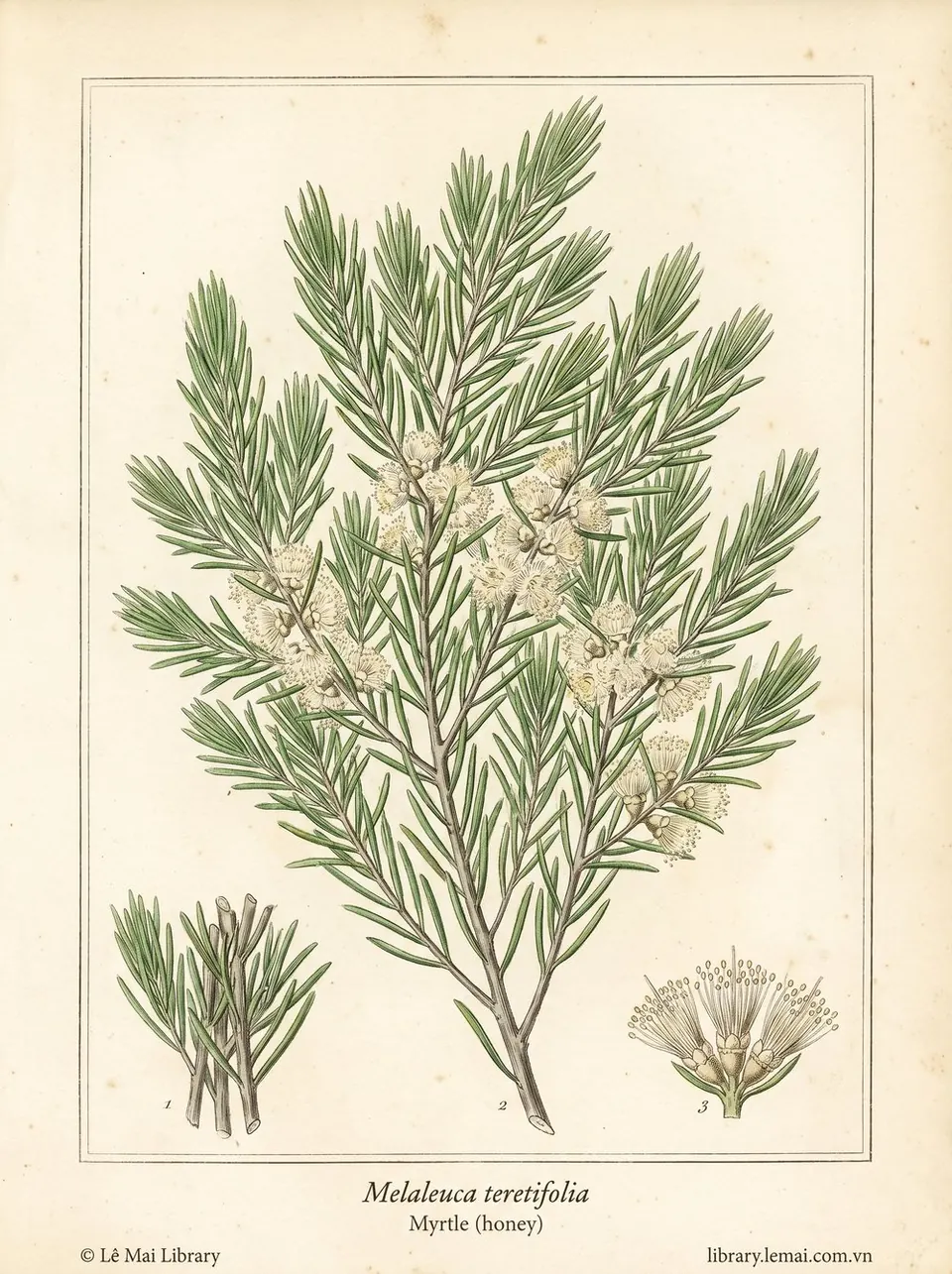
Botanical illustration of Melaleuca teretifolia; leaves used to extract Myrtle (honey) essential oil
Myrtle (honey) essential oil, extracted from the leaves of Melaleuca teretifolia. Botanical illustration, Lê Mai Library.

Safety

Skin sensitization · Citral high

Citral (geranial plus neral) comprises 80-90 percent. Clear skin sensitization potential.

Drug interactions through CYP2B6 inhibition. Use orally with caution.

Low dermal concentration recommended.

Store properly to prevent citral oxidation.


Usage guidelines

Maximum dermal level
0.7 percent
Storage
Dark, sealed, refrigerated; add antioxidant

Chemistry

Volatile constituents
Geranial45.0 – 55.0 %
Neral30.0 – 40.0 %
(+)-Limonene2.0 – 5.0 %
Methyl heptenone1.0 – 3.0 %

Botanical source

Melaleuca teretifolia is a shrub from Western Australia. Fragrant flowers attract bees, honey from these flowers has a distinctive character.

Commercial oil production started in the 1990s. Limited production, mainly in Australia.

Family Myrtaceae.


Origin, season and context

Main producing countries
Australia

Notes

Strong citrus aroma, honeyed, fresh. More complex than lemongrass with a floral note.

Used in niche perfumery for citrus-floral applications.