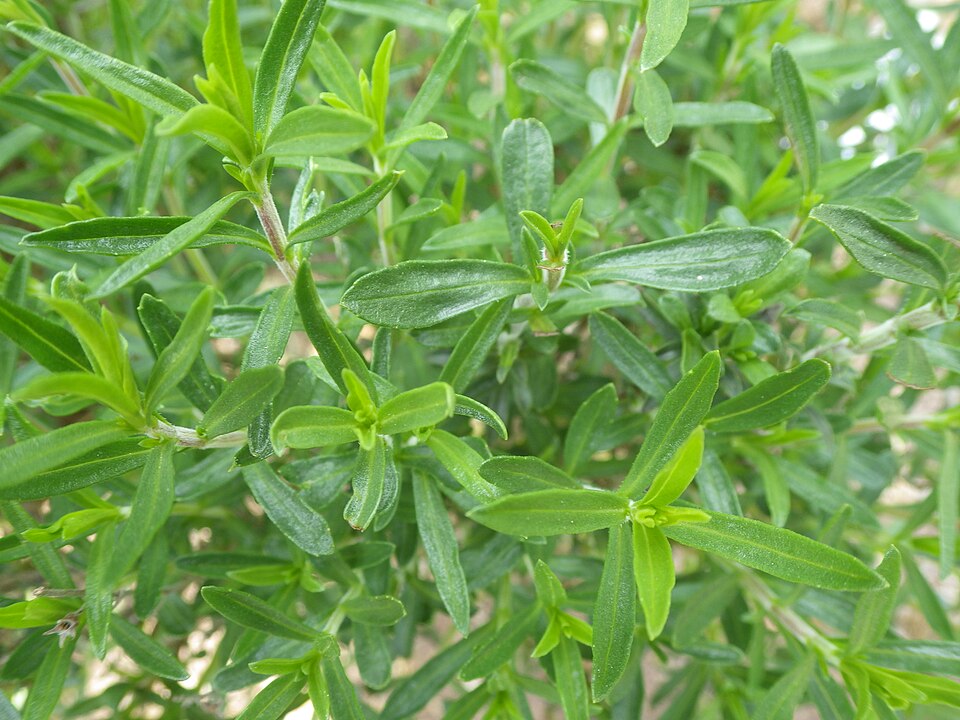
サボリー
Savory, Hương thảo dại
Satureja hortensis (summer) / Satureia montana (winter)
Mountain savory
Carvacrol up to 75 percent. Phenol strongly irritates skin and mucous membranes.
May inhibit platelet aggregation. Use orally with caution.
Oral caution: antidiabetic drugs, anticoagulants.
Very low dermal concentration recommended.
Strong enough to cause 50 percent mortality in mice within 48 hours when undiluted.
| Carvacrol | 43.6 – 75.0 % |
| γ-Terpinene | 1.8 – 42.8 % |
| p-Cymene | 0.9 – 14.6 % |
| Thymol | 1.0 – 8.0 % |
| β-Caryophyllene | 0 – 13.6 % |
| α-Terpinene | 0 – 3.5 % |
| α-Pinene | 0 – 2.7 % |
Satureja hortensis (summer savory, culinary) and Satureia montana (winter savory) are two species in the same genus. Similar chemistry, carvacrol dominant.
In Mediterranean cuisine, savory is a seasoning for meat and beans. The old English name 'satureja' relates to Latin 'satyr', an ancient symbol of sensuality.
Family Lamiaceae.
Stronger than oregano for antibacterial action. Strictly limited in cosmetics.
In traditional medicine used for digestion and as a stimulant.