Carvacrol
2-Methyl-5-(1-methylethyl)phenol
Antioxine · p-Cymen-2-ol · 2-Hydroxy-p-cymene · Isothymol
化学組成 · Constituent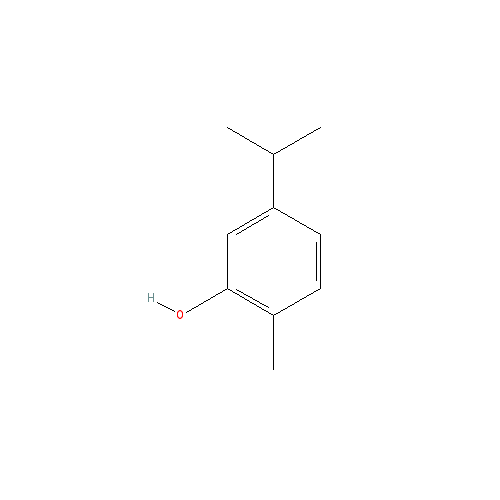
2-Methyl-5-(1-methylethyl)phenol
Antioxine · p-Cymen-2-ol · 2-Hydroxy-p-cymene · Isothymol
化学組成 · Constituent
Carvacrol is a monoterpenoid phenol, a weak acid that can be corrosive to tissues. The compound is the major constituent of oregano and savory; it has strong antibacterial activity but also irritates mucous membranes.
Skin. Undiluted on rabbit skin it was severely irritating. A 4 percent patch test on volunteers caused neither irritation nor sensitization; at 0.1 and 1 percent it irritated dermatitis patients. Thyme oil sensitive patients also reacted to carvacrol. In 179 cosmetic-suspect patients, 2 (1.1 percent) reacted to 5 percent.
Oral. Acute oral LD50 in rats is 810 mg/kg. Rabbit oral lethal dose is 100 mg/kg. Rabbit dermal LD50 exceeds 5 g/kg. Dog intravenous lethal dose is 310 mg/kg.
Cardiovascular. Strong antiplatelet aggregation activity in vitro. Satureja khuzestanica oil (93.9 percent carvacrol) reduced blood glucose in diabetic rats.
Reproductive. Pregnant rats given 100–1,000 ppm Satureja khuzestanica on days 0–15 showed no maternal toxicity or teratogenicity; implantation numbers and live fetuses even increased.
Liver. Carvacrol protects rat liver from CCl4 and ischemia-reperfusion damage, with strong antioxidant activity.
Mutagenicity. Non-mutagenic and even antimutagenic in the Ames test. Protected human lymphocytes from hydrogen peroxide DNA damage at low concentrations. At high concentrations of 0.1–2 mM, the compound becomes genotoxic.
Weak genotoxic potential, but DNA-level activity cannot be excluded.
| Oregano | 61.6 – 83.4 % |
| Marjoram wild (carvacrol CT) | 76.4 – 81.0 % |
| Savory (summer + winter) | 43.6 – 75.0 % |
| Thyme (spike) | 70.0 % |
| Thyme (thymol CT, carvacrol CT, thymol/carvacrol CT) | 5.5 – 43.9 % |
| Oregano (Mexican) | 0.5 – 24.8 % |
| Marjoram wild (linalool CT) | 23.3 % |
| Thyme (limonene CT) | 20.5 % |
| Thyme (borneol CT) | 20.0 % |
| Ajowan | 1.0 – 16.4 % |
| Thyme (lemon) | 15.4 % |
| Black seed | 0.5 – 4.2 % |
| Verbena (white) | 0 – 1.8 % |
| Eucalyptus (polybractea cryptone CT) | 1.1 % |
| Thyme (linalool CT) | 1.0 – 1.1 % |
Carvacrol is rapidly excreted in urine, primarily as a tertiary alcohol derivative formed by oxidation of the isopropyl group.
Carvacrol is the isomer of thymol. Both compounds have strong antimicrobial activity and are used in soaps and skin care for oily and acne-prone skin. Antioxidant activity is significant.
Oral oregano oil is being investigated for antimicrobial activity.