Thymol
2-Isopropyl-5-methylphenol
2-(1-Methylethyl)-5-methylphenol · p-Cymen-3-ol · Thyme camphor
化学組成 · Constituent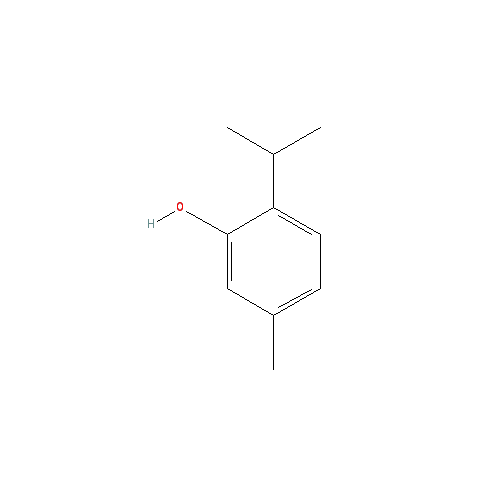
2-Isopropyl-5-methylphenol
2-(1-Methylethyl)-5-methylphenol · p-Cymen-3-ol · Thyme camphor
化学組成 · Constituent
Thymol is a substituted phenol with weak acid activity and tissue corrosive potential. It is traditionally used in antiseptic mouthwashes and inhalation mixtures. Isomeric with carvacrol.
Skin. A 48-hour occlusive patch test on 50 volunteers gave a no-reaction maximum of 5 percent. At 1 percent there were no reactions in 290 eczema patients or 1,200 dermatitis patients. In 70 contact dermatitis patients no reactions occurred. Two cases of allergic contact dermatitis to thymol have been reported. Classified as Category C, not significantly allergenic.
Mucous. Thymol irritates the gastric mucosa, with fats and alcohol increasing absorption and aggravating symptoms. However, oral Lippia sidoides oil with 67 percent thymol at 1, 5 and 10 mg/kg inhibited alcohol-induced gastric lesions, with the effect reversing at higher doses.
Oral. Acute oral LD50 was 1,800 mg/kg in mice, 980 mg/kg in rats and 880 mg/kg in guinea pigs. Dog intravenous lethal dose was 150 mg/kg.
Subchronic. Rats fed 1,000 or 10,000 ppm thymol for 19 weeks showed no adverse effects.
Cardiovascular. Thymol inhibits arachidonic acid-induced platelet aggregation, over 30 times more potently than aspirin.
Liver. A hypothesis links thymol as an antioxidant in halothane to a rare form of severe liver damage. In isolated rat hepatocytes, thymol at 0.2 to 4 mM dose-dependently increased GOT leakage. However, thymol also protected rat liver from carbon tetrachloride-induced damage through free radical scavenging.
Mutagenicity. Results depend on dose and assay. At low concentrations thymol was not genotoxic and protected lymphocytes from DNA damage. At higher concentrations it was genotoxic. Overall genotoxic potential is considered very weak.
| Thyme (thymol CT, carvacrol CT, thymol/carvacrol CT) | 30.9 – 74.0 % |
| Oregano (Mexican) | 0.2 – 60.6 % |
| Ajowan | 36.9 – 53.8 % |
| Thyme (limonene CT) | 27.6 % |
| Thyme (borneol CT) | 10.0 % |
| Savory (summer + winter) | 1.0 – 8.0 % |
| Oregano | 0.3 – 4.4 % |
| Thyme (linalool CT) | 1.0 – 3.8 % |
| Fir needle (Canadian) | 0 – 2.9 % |
| Damiana | 2.3 % |
| Tansy (blue) | 0.8 – 1.8 % |
| Wormseed | 1.0 % |
Thymol is primarily excreted as glucuronide and sulfate conjugates in rabbits, dogs and humans. A small amount is oxidized to thymoquinol. After ingestion of 0.6 g of thymol, humans excrete thymol glucuronide, thymol sulfate, small amounts of thymoquinol sulfate and unchanged thymol in urine.
After ingestion of 1.08 mg of thymol, peak plasma concentration reached 93.1 ng/mL at 2 hours. The terminal elimination half-life was about 10.2 hours. Thymol sulfate was detectable up to 41 hours after administration. Total urinary excretion of thymol sulfate and glucuronide over 24 hours was 16.2 percent of the dose.
Thymol and carvacrol are the principal monoterpene phenols in thyme and oregano. They show strong antibacterial and antifungal activity and are studied for oral care products and natural preservation.
Thymol's structure is close to carvacrol, with the methyl and isopropyl groups in reversed positions. Both compounds share similar biological activity.