ケラ
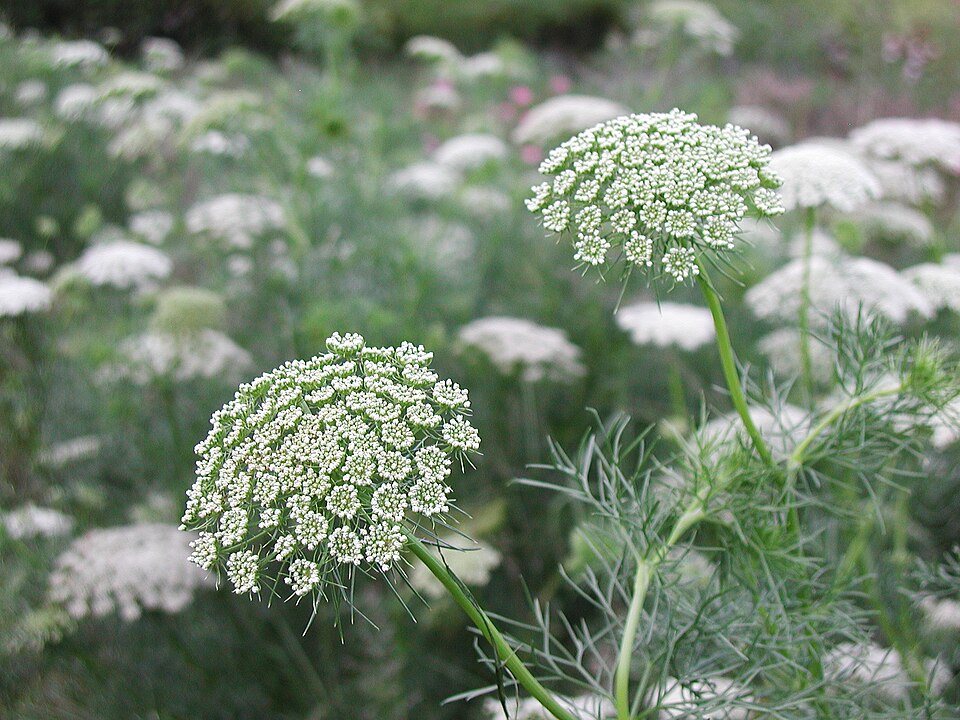
Khella (Ammi visnaga)
Ammi visnaga
Toothpick ammi, Chellah, Bisnaga
Potentially phototoxic, khella oil has been reported to contain furanocoumarins marmesine and 8-hydroxybergapten in unknown amounts. The oil has not been formally tested for phototoxicity.
In Australia, khella oil is classed as a poison due to its khellin content (a toxic furanochromone, rat LD50 80 mg per kg).
One analysis reports 1 percent khellin in the oil, another reports none. Burfield notes he has never detected khellin in commercial khella oil.
Linalool oxidation products may sensitize.
Pulegone limits of 0.5 mg per kg and dermal 1 percent do not translate to meaningful restriction for khella oil (only 1.8 percent pulegone).
| Linalool | 28.8 % |
| Isoamyl 2-methylbutyrate | 18.2 % |
| Amyl isobutyrate | 10.6 % |
| Amyl valerate | 9.6 % |
| Geranyl linalool | 4.1 % |
| Isoamyl isovalerate | 3.1 % |
| 2-Methylbutyl isovalerate | 2.8 % |
| Pulegone | 1.8 % |
| Isoamyl isobutyrate | 1.7 % |
| Decyl isobutyrate | 1.4 % |
| Citronellyl propionate | 1.2 % |
| (+)-Limonene | 1.1 % |
Ammi visnaga is an annual herb of the Mediterranean and North Africa. The dried flower stalks have been used traditionally as toothpicks in Egypt, the source of 'toothpick ammi'.
The oil is steam-distilled from the seeds. Limited availability.
Family Apiaceae. Khella has a traditional medicinal history, purified khellin has been used as a vasodilator and antianginal drug.