α-Pulegone
5-Methyl-2-(1-methylethenyl)cyclohexanone
p-Menth-8-en-3-one · Isopulegone
化学組成 · Constituent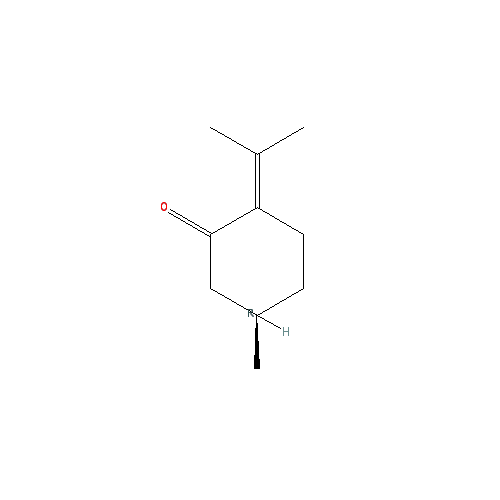
5-Methyl-2-(1-methylethenyl)cyclohexanone
p-Menth-8-en-3-one · Isopulegone
化学組成 · Constituent
α-Pulegone occurs at low levels in buchu (pulegone chemotype) and a few other oils. The β-pulegone isomer is the more toxic form and is more abundant in pennyroyal oils.
Acute. In male mice given α-pulegone at 400, 500 or 600 mg/kg intraperitoneally, dose-dependent hepatotoxicity and lethality were observed. At 400 mg/kg no mice died, while at the same dose of (1R)-(+)-β-pulegone, 9 of 16 mice died.
Caution. Given structural similarity, α-pulegone is presumed to share the risk profile of β-pulegone, though at a lower level. Pulegone-containing oils should be avoided in pregnancy and at high oral doses.
| Buchu (pulegone CT) | 2.2 – 3.9 % |
| Pennyroyal | 0.2 – 1.6 % |
| Buchu (diosphenol CT) | 0.4 – 4.6 % |
Reference literature distinguishes (R)-(Z)-α-pulegone and (S)-(E)-α-pulegone, observed in different oils. β-Pulegone is the principal constituent of pennyroyal oil and has been associated with severe hepatic poisoning and death in humans following pennyroyal ingestion.
The metabolite menthofuran is more hepatotoxic than pulegone itself. Total pulegone plus menthofuran is the practical risk parameter.