Coumarin
2H-1-Benzopyran-2-one
1,2-Benzopyrone · Tonka bean camphor
化学組成 · Constituent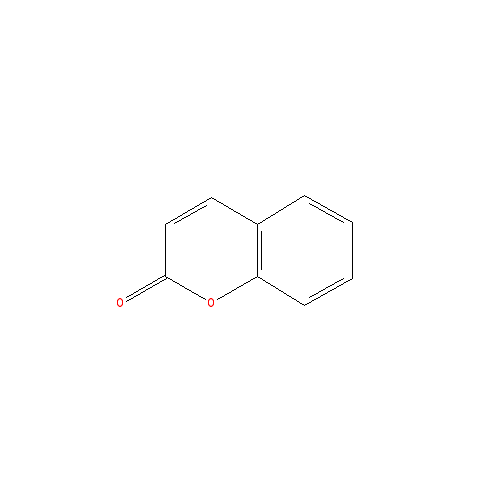
2H-1-Benzopyran-2-one
1,2-Benzopyrone · Tonka bean camphor
化学組成 · Constituent
Coumarin is the lactone responsible for the new-mown hay aroma. Listed among the 26 EU fragrance allergens, the compound carries hepatic risk in a subset of poor metabolizers.
Skin. An 8 percent patch test on 25 volunteers caused no sensitization. Among 14,000 dermatitis patients, 58 (0.4 percent) reacted to 5–8 percent. Population sensitization rates are low.
Oral. Acute oral LD50 in rats is 293 mg/kg, in mice 196 mg/kg. The human fatal dose is estimated much higher due to different metabolism.
Liver. Coumarin is hepatotoxic in rodents through the 3,4-oxide metabolite. In humans the dominant pathway is 7-hydroxylation (79 percent), producing fewer toxic species. However about 1 percent of the population carries CYP2A6 variants that hydroxylate poorly, leading to elevated liver enzymes. Self-resolving hepatitis has been reported at 90 mg/day in a study of 231 German patients.
Drug interactions. Coumarin inhibits mouse brain monoamine oxidase with IC50 41.4 μM, suggesting interactions with MAOI and SSRI drugs when taken orally.
Reproductive. The compound crosses placenta and milk, with no direct human harm data.
Cancer. NTP classifies coumarin as having clear evidence of carcinogenicity in female mice and some evidence in males. However human metabolism differs markedly from rodents, and the rodent cancer pathway has not been demonstrated in humans. The general view is that coumarin is not a human carcinogen at realistic intake levels.
Mutagenicity. Non-mutagenic in the Ames test. Protective against DNA damage in some assays.
| Sweet vernalgrass | 46.8 – 68.0 % |
| Tonka | 38.7 – 58.7 % |
| Deertongue | < 25.0 % |
| Lavender | 4.3 % |
| Lavandin | 3.0 % |
| Cassia | 0.03 – 2.5 % |
| Narcissus | 0 – 1.2 % |
Coumarin is rapidly absorbed through skin and gut, with rapid distribution and excretion. Plasma half-life after dermal application is about 1.7 hours in humans and 5 hours in rats.
In humans, the dominant pathway is 7-hydroxylation to 7-hydroxycoumarin (79 percent). In rodents, the 3,4-oxide route predominates, yielding potentially toxic metabolites. Extensive first-pass metabolism occurs in the liver.
Coumarin is the key carrier of the hay note in lavender absolute and tonka. The compound was once used as a food flavoring but has been restricted by the FDA over rodent hepatotoxicity concerns.
High concentrations in tobacco smoke are a significant population exposure source.