p-Anisaldehyde
4-Methoxybenzaldehyde
Anisaldehyde · Anisic aldehyde
化学組成 · Constituent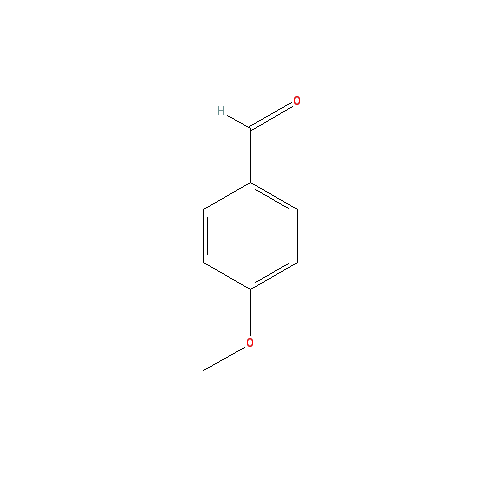
4-Methoxybenzaldehyde
Anisaldehyde · Anisic aldehyde
化学組成 · Constituent
p-Anisaldehyde may be an oxidation product rather than a true native constituent in many essential oils. Available data indicate the compound is safe at practical use levels.
Skin. Patch testing at 10 percent on human subjects showed neither irritation nor sensitization.
Oral and dermal. Acute oral LD50 is 1.51 g/kg in rats and 1.26 g/kg in guinea pigs. Acute dermal LD50 in rabbits exceeds 5 g/kg.
Subchronic. Rats fed 10,000 ppm for 15 weeks showed no adverse effects, nor did 1,000 ppm for 28 weeks.
Mutagenicity and carcinogenicity. Non-mutagenic in the Ames test. The compound inhibits growth of human lung, liver and stomach carcinoma cells in vitro and inhibits activation of carcinogenic nitrosamines.
| Cassie | 0 – 17.3 % |
| Anise | 0.6 – 2.0 % |
Anisaldehyde is metabolized by glucuronide conjugation in rabbits and oxidized to anisic alcohol and anisic acid in rats. It prolongs pentobarbital-induced sleep in rats, likely by modulating CYP-mediated drug metabolism.
Anisaldehyde is widely used in food flavoring for its sweet anise note. Most commercial anisaldehyde is produced by oxidation of p-methyl anisole.