Benzaldehyde
Benzaldehyde
Benzoic aldehyde · Benzenecarbaldehyde · Formyl benzene
化学組成 · Constituent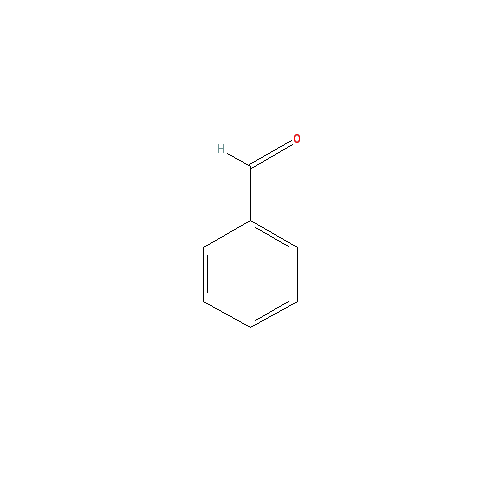
Benzaldehyde
Benzoic aldehyde · Benzenecarbaldehyde · Formyl benzene
化学組成 · Constituent
Benzaldehyde là cấu tử định nghĩa mùi hạnh nhân đắng. Hợp chất không gây kích ứng hay dị ứng da đáng kể, nhưng hơi của nó có thể gây kích ứng hô hấp.
Trên da. Patch test ở 4 phần trăm trên hai nhóm tình nguyện không gây kích ứng hay mẫn cảm. Trong 747 bệnh nhân nghi nhạy hương liệu, ba người (0.4 phần trăm) phản ứng với 5 phần trăm benzaldehyde.
Đường uống. LD50 cấp tính chuột là 1.3 g/kg, chuột lang 1.0 g/kg. Liều tử vong đường uống ở người ước tính 50–60 mL. Liều uống 200–400 mg/người trong nghiên cứu lâm sàng ngắn hạn không gây độc.
Hô hấp. Liều hít 500 ppm gây kích ứng mắt và mũi ở thỏ; 750 ppm gây tử vong. Mức RD50 là 363 ppm.
Đột biến gen. Không gây đột biến Ames. Kết quả về CA và SCE không nhất quán giữa các nghiên cứu.
Ung thư. Trong nghiên cứu hai năm dạng uống, benzaldehyde không độc với chuột và yếu gây ung thư ở chuột nhắt, tăng nhẹ u nhú dạng vảy và phì đại tiền dạ dày. Benzaldehyde được xếp loại chất gây ung thư đặc trưng cho chuột nhắt, không qua đột biến gen.
Liều uống dài hạn 10 mg/kg ở người được xác nhận không độc.
Benzaldehyde is the defining constituent of bitter almond. The compound is neither a significant skin irritant nor allergen, but vapor can irritate the respiratory tract.
Skin. A 4 percent patch test on two panels of volunteers showed no irritation or sensitization. In 747 fragrance-suspect patients, three (0.4 percent) reacted to 5 percent benzaldehyde.
Oral. Acute oral LD50 is 1.3 g/kg in rats, 1.0 g/kg in guinea pigs. Estimated human oral fatal dose is 50 to 60 mL. Oral 200–400 mg per person in short-term clinical studies showed no toxicity.
Respiratory. Inhalation at 500 ppm caused eye and nose irritation in rabbits; 750 ppm was fatal. RD50 is 363 ppm.
Mutagenicity. Non-mutagenic in the Ames test. CA and SCE results are inconsistent across studies.
Carcinogenicity. In two-year oral studies, benzaldehyde was non-toxic to rats and very weakly carcinogenic to mice, with increased squamous papillomas and forestomach hyperplasia. Benzaldehyde is classified as a mouse-specific, non-genotoxic carcinogen.
Long-term oral 10 mg/kg in humans is established as a safe dose.
| Hạnh đào đắng FFPA · Almond, bitter (FFPA) | 98 % |
| Hạnh đào đắng · Almond, bitter (unrectified) | 95.0 % |
| Quế Cassia · Cassia leaf | 1.1 – 6.3 % |
| Cistus | 0 – 2.8 % |
| Quế (vỏ) · Cinnamon bark | tr – 2.2 % |
Khoảng 90 phần trăm benzaldehyde được oxi hoá thành benzoic acid và bài tiết dưới dạng tự do hoặc hippuric acid sau liên hợp với glycine. Thỏ cũng bài tiết khoảng 10 phần trăm dưới dạng benzoyl glucuronide.
Hợp chất chuyển hoá thành benzoic acid ngay tại da. Hấp thu qua đường hô hấp ở chuột nhanh và bài tiết chủ yếu qua nước tiểu dưới dạng hippuric acid.
About 90 percent of benzaldehyde is oxidized to benzoic acid and excreted free or as hippuric acid after conjugation with glycine. Rabbits also excrete about 10 percent as benzoyl glucuronide.
The compound is metabolized to benzoic acid directly in the skin. Inhaled benzaldehyde is rapidly absorbed in rats and primarily excreted in urine as hippuric acid.
Benzaldehyde thể hiện hoạt tính chống ung thư đáng kể trong thử nghiệm tiền lâm sàng và lâm sàng. Trong nghiên cứu 102 bệnh nhân ung thư giai đoạn cuối dùng phức hợp β-cyclodextrin–benzaldehyde, 19 trong 57 đáp ứng hoàn toàn và 10 đáp ứng một phần, với độ an toàn tốt.
Hợp chất cũng nằm trong danh sách hoá chất kiểm soát FDA do có thể được dùng để tổng hợp methamphetamine.
Benzaldehyde shows substantial anticancer activity in preclinical and clinical studies. In a trial of 102 late-stage cancer patients given a β-cyclodextrin–benzaldehyde inclusion compound, 19 of 57 responded completely and 10 partially, with good tolerability.
The compound is on the FDA Controlled Substances list because it can be used to synthesize methamphetamine.