ユーカリ グロブルス
Bạch đàn cầu
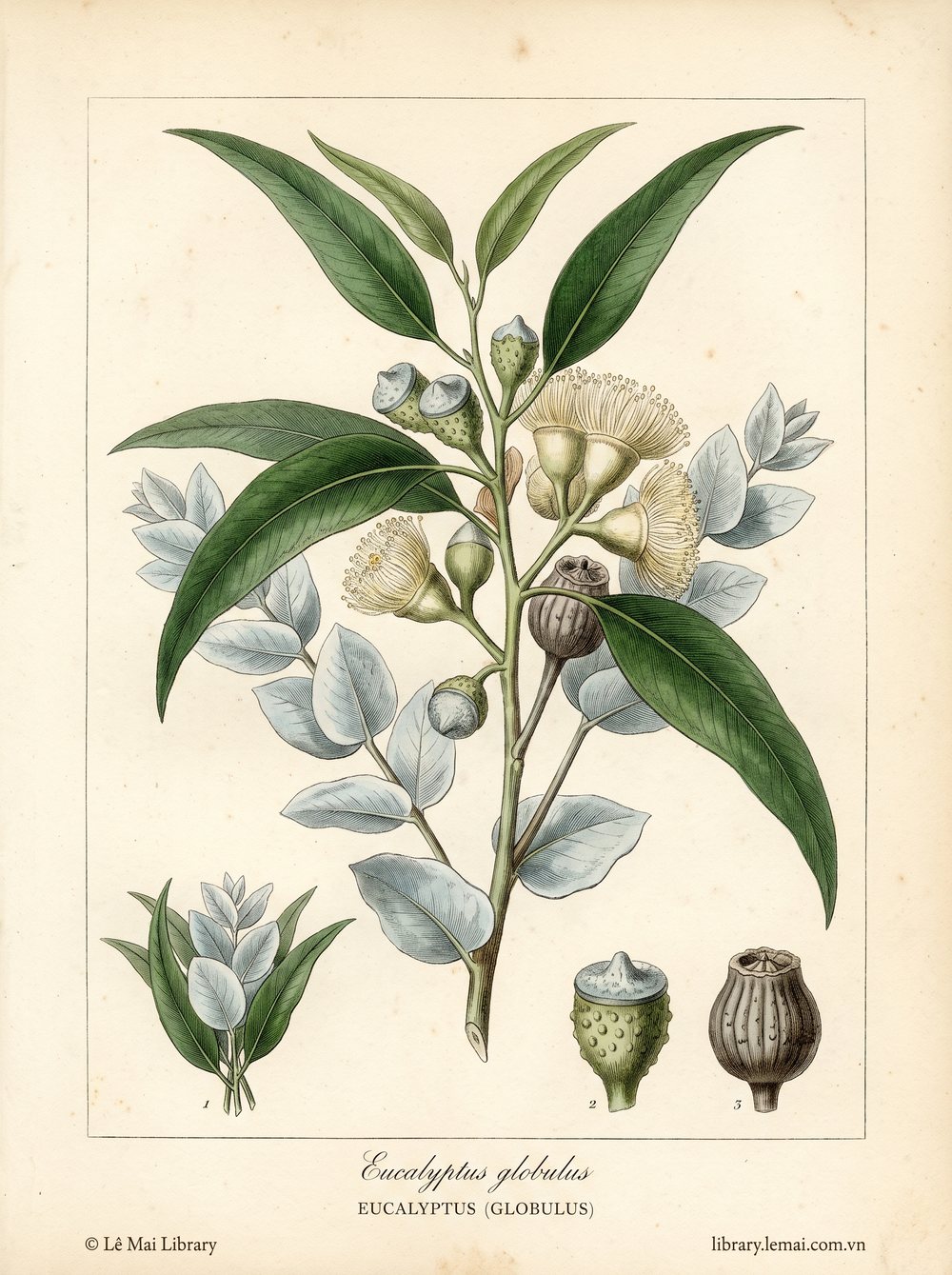
Eucalyptus globulus
Blue gum, Tasmanian blue gum
Oils high in 1,8-cineole can cause CNS and breathing problems in young children.
Contraindication: do not apply to or near the face of infants and children under 10 years.
Maximum adult oral dose 600 mg daily. Maximum dermal use level 20 percent.
Many cases of severe child poisoning from oral eucalyptus oil. Doses of 5 to 10 mL can cause unconsciousness in children.
Adult poisoning symptoms: CNS depression, abnormal respiration, pinpoint pupils. Death has occurred 15 minutes to 15 hours after ingestion. Doses of 30 mL or more are usually fatal; one case survived 240 mL (with treatment).
Health Canada limits eucalyptus oil to 25 percent in cosmetics. Australia classifies it as 'Schedule 6 poison', requires child-resistant closures.
| 1,8-Cineole | 65.4 – 83.9 % |
| α-Pinene | 3.7 – 14.7 % |
| (+)-Limonene | 1.8 – 9.0 % |
| Globulol | tr – 5.3 % |
| (E)-Pinocarveol | 2.3 – 4.4 % |
| p-Cymene | 1.2 – 3.5 % |
| (+)-Aromadendrene | 0.1 – 2.2 % |
| Pinocarvone | tr – 1.0 % |
Eucalyptus globulus is a tall tree endemic to Tasmania and southeastern Australia. The name 'blue gum' reflects the powdery blue color of juvenile leaves.
The world's largest commercial source of cineole-rich eucalyptus is now produced in Yunnan, China. Portugal, Spain, India and South Africa are also major producers. Australia contributes 5 to 10 percent of world production.
Family Myrtaceae. Same family as tea tree, niaouli, cajuput.
Eucalyptus globulus oil is generally not adulterated due to its low price.
The European Pharmacopoeia requires a minimum 70 percent 1,8-cineole. Fractional distillation to concentrate cineole to meet this standard is a common practice.