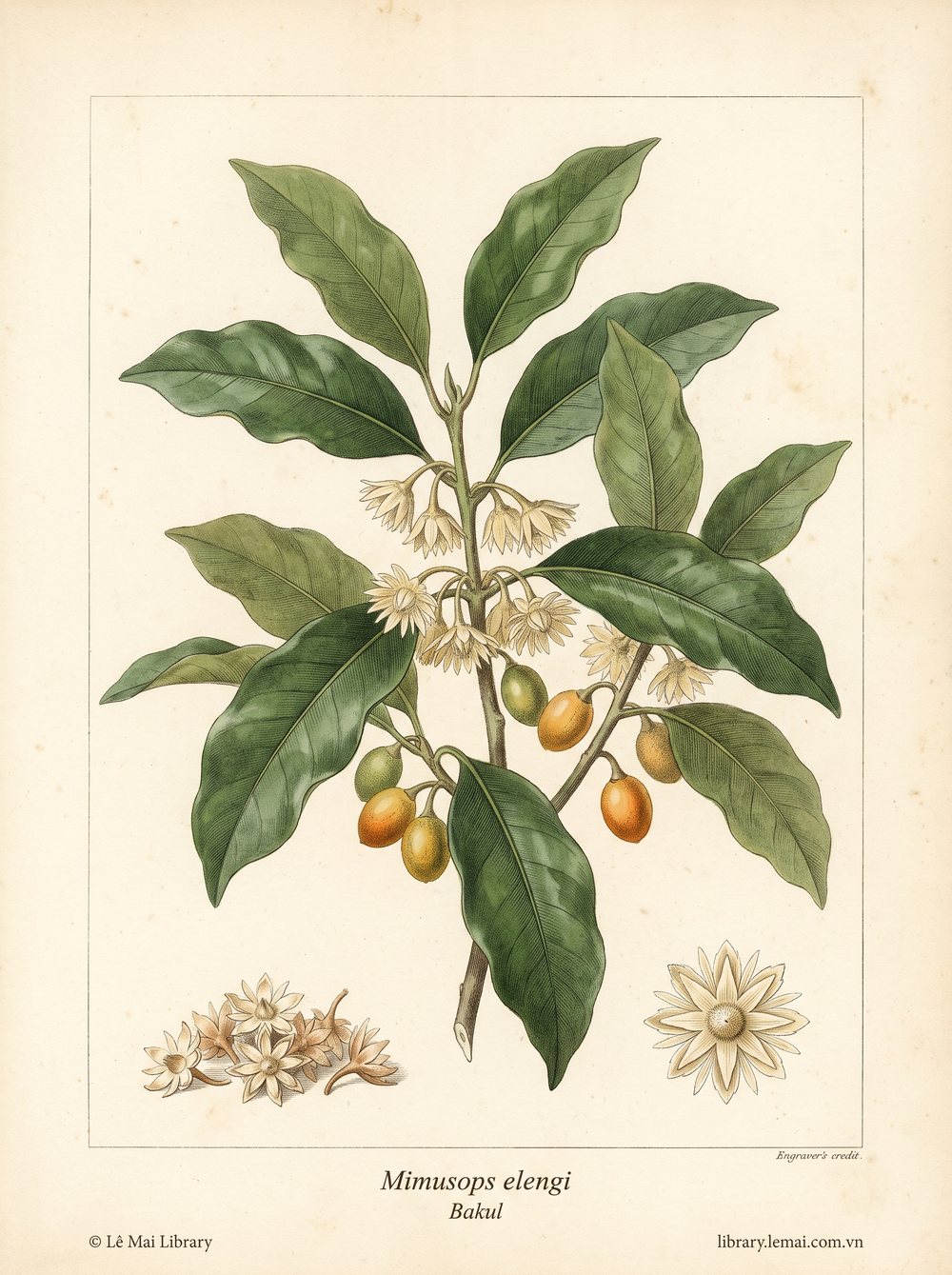
バクル
Bakul (Mimusops elengi)
Mimusops elengi
Bakula, Vakul, Vakula
Low risk of skin sensitization.
Cinnamyl alcohol and methyl salicylate are present at low levels, below thresholds requiring restriction.
No specific contraindications.
| 2-Phenylethanol | 38.8 % |
| (E)-Cinnamyl alcohol | 13.7 % |
| 3-Hydroxy-4-phenyl-2-butanone | 4.7 % |
| Methyl benzoate | 3.8 % |
| (E)-Methyl cinnamate | 3.6 % |
| Nerolidol | 3.2 % |
| 2-Phenylethyl acetate | 2.6 % |
| Ethyl benzoate | 2.4 % |
| (E)-Ethyl cinnamate | 1.9 % |
| Methyl salicylate | 1.9 % |
| Benzyl alcohol | 1.6 % |
| (E)-Cinnamaldehyde | 1.3 % |
Mimusops elengi is a tropical tree native to South and Southeast Asia. The small, cream-white flowers carry a distinctive scent that persists after drying.
Solvent extraction yields an absolute. Some producers extract by supercritical CO2.
Family Sapotaceae. The flowers have a traditional use in Java as a treatment for diarrhea. Co-distillation with sandalwood produces an attar.
Bakul absolute is a rarefied perfumery material kept for traditional Indian and Southeast Asian floral accords.