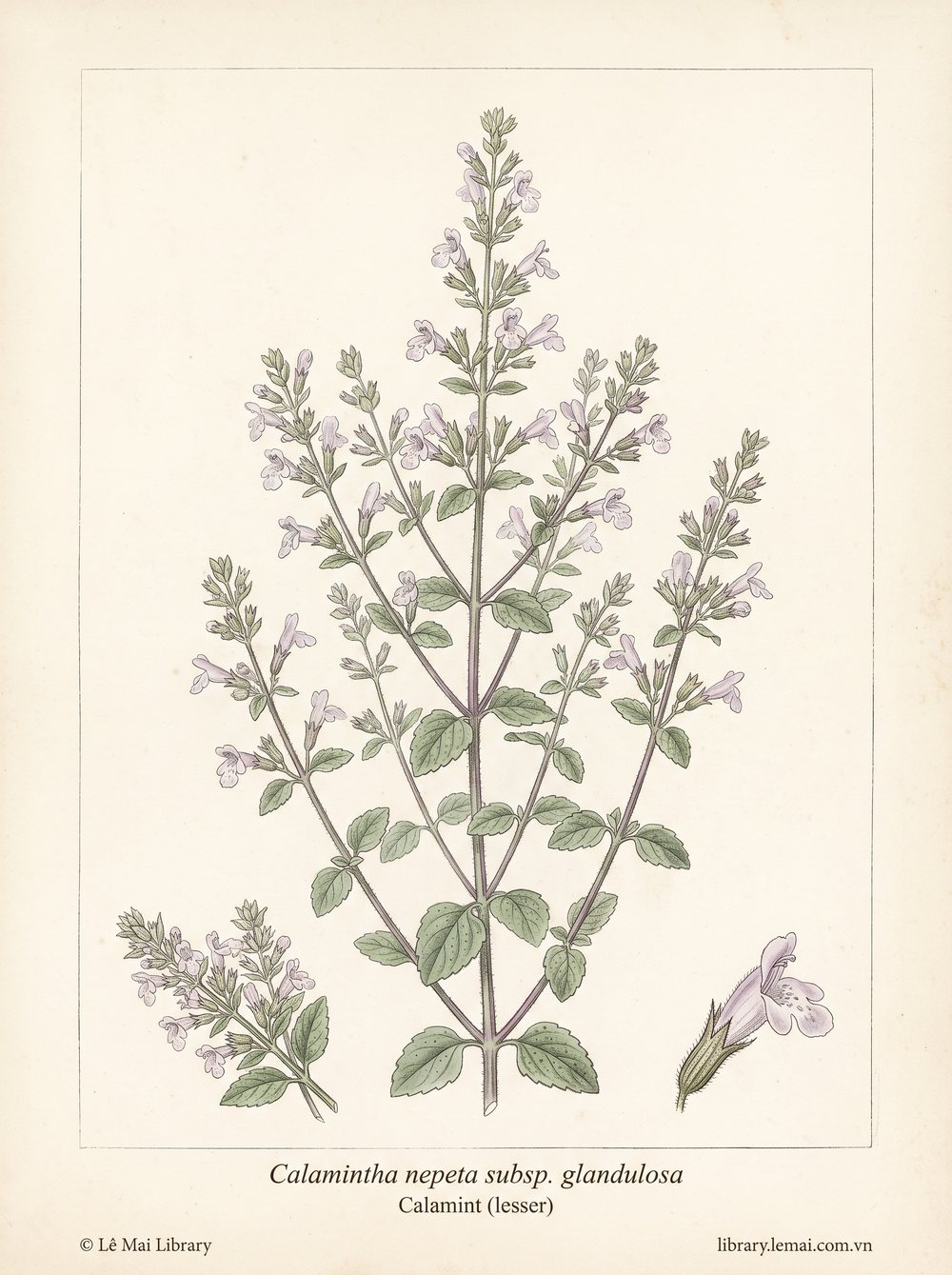
カラミント レッサー
Calamint nhỏ
Calamintha nepeta subsp. glandulosa
Cuckoo flower, Field balm, Nepitella, Calamintha officinalis
May be abortifacient. Hepatotoxic.
Broad contraindications: pregnancy, breastfeeding.
Should not be taken orally.
Maximum dermal use level 1.5 percent, based on 76.1 percent β-pulegone and a dermal limit of 1.2 percent.
Pulegone is hepatotoxic as it is metabolized to epoxides. Especially toxic by mouth.
| (1R)-(+)-β-Pulegone | 17.6 – 76.1 % |
| Menthone | 7.0 – 55.8 % |
| Piperitone oxide | 0 – 12.4 % |
| Piperitenone | 0 – 7.3 % |
| Piperitone | 0 – 7.4 % |
| (+)-Limonene | 0.6 – 7.2 % |
| Terpinen-4-ol | 0 – 6.8 % |
| (E)-Sabinene hydrate | 0 – 3.5 % |
| Isomenthone | 0 – 2.8 % |
| 3-Octanol | 1.0 – 2.1 % |
| Piperitenone oxide | 0 – 1.1 % |
Calamintha nepeta is a Mediterranean perennial herb. Subsp. glandulosa has three chemotypes: pulegone, piperitone oxide, piperitenone oxide. Only the pulegone chemotype is commercially available.
Subsp. nepeta has two chemotypes: pulegone and piperitone oxide.
Family Lamiaceae. This oil is sometimes confused with catnip oil (Nepeta cataria).
Limited availability. Theoretical oral maximum of 46 mg for an adult based on a 0.5 mg per kg per day limit for pulegone, but there is no significant medicinal benefit so best avoided entirely.