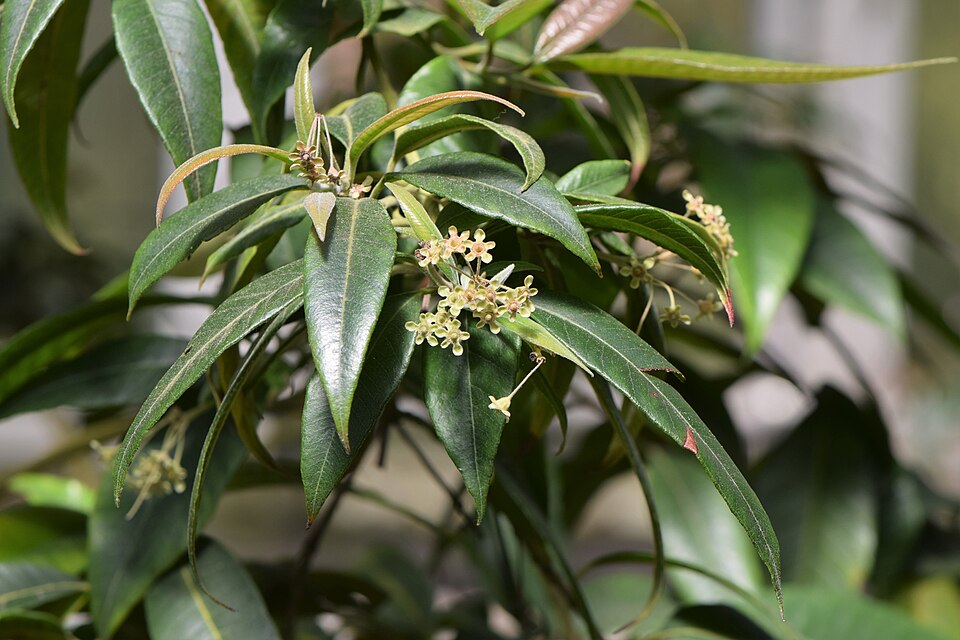
レモンミルトル
Sim chanh
Backhousia citriodora
Lemon myrtle
Citral comprises 90-95 percent, the highest content among citral-rich oils. Pronounced skin sensitization risk.
Drug interactions through CYP2B6 inhibition.
Very low dermal concentration recommended.
Store properly.
| Geranial | 50.0 – 65.0 % |
| Neral | 30.0 – 40.0 % |
| (+)-Limonene | 1.0 – 3.0 % |
| Citronellal | 0.5 – 2.0 % |
Backhousia citriodora is a medium-sized tree from Queensland, Australia. The leaves have the strongest citrus aroma of any known plant.
In Aboriginal culture, the leaves are traditionally used as tea and seasoning.
Production is mainly in Queensland. Lemon myrtle has become a commercial crop in many Australian regions.
Family Myrtaceae.
Cleaner, stronger citrus aroma than expressed lemon. In cosmetics and food, lemon myrtle is a popular natural citrus ingredient in Australia.
Similar to lemongrass and may chang in citral content, but with a more crystalline aromatic profile.