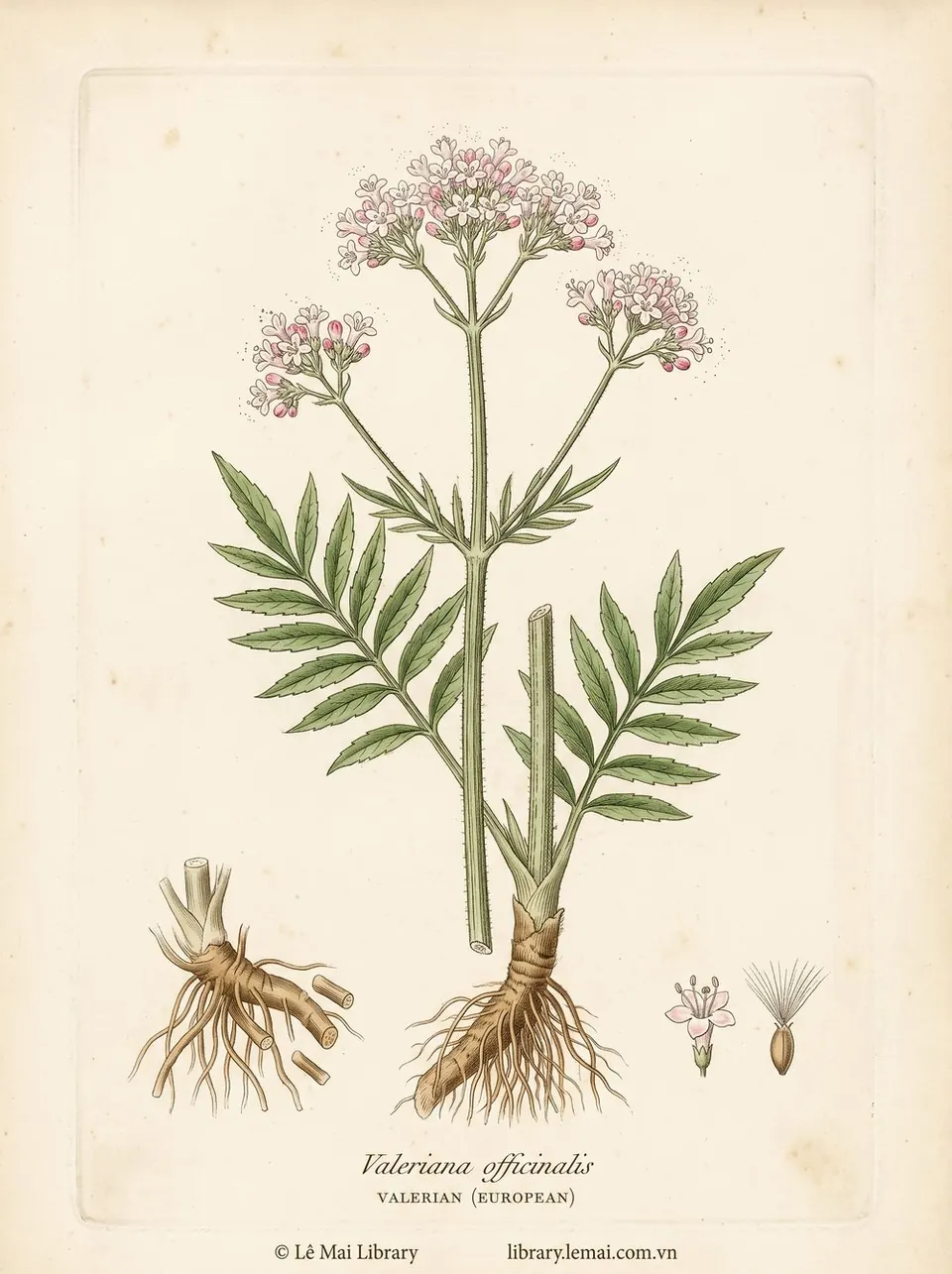
ヨーロピアンバレリアン
Cam tùng châu Âu
Valeriana officinalis
Garden valerian
European valerian essential oil is steam-distilled from the rhizomes of Valeriana officinalis, a European herb of the honeysuckle family cultivated in Bulgaria, France, Germany and China. It smells earthy, musty and heavy, an acquired taste; its main components are bornyl acetate and valeranone. Bulgaria prohibits wild harvest, so only cultivated sources are used, and small amounts suit earthy perfume bases.
Updated 4 Nov 2026 · Lê Mai Team
Low skin sensitization risk.
May cause drowsiness. Avoid before driving or focus-intensive tasks.
Sustainability: Bulgaria prohibits wild Valeriana officinalis harvest, only cultivated.
No clear pregnancy data.
| Bornyl acetate | 10.0 – 35.0 % |
| Valeranone | 5.0 – 15.0 % |
| α-Pinene | 5.0 – 12.0 % |
| Camphene | 3.0 – 10.0 % |
Valeriana officinalis is a European herb. The roots have a characteristic earthy-musty aroma, not pleasant.
Cultivated in Bulgaria, France, Germany, China.
Family Caprifoliaceae (previously Valerianaceae).
Valerian has been extensively studied.