Diallyl sulfide
Di-(2-propenyl) sulfide
Allyl sulfide · Thioallyl ether
化学組成 · Constituent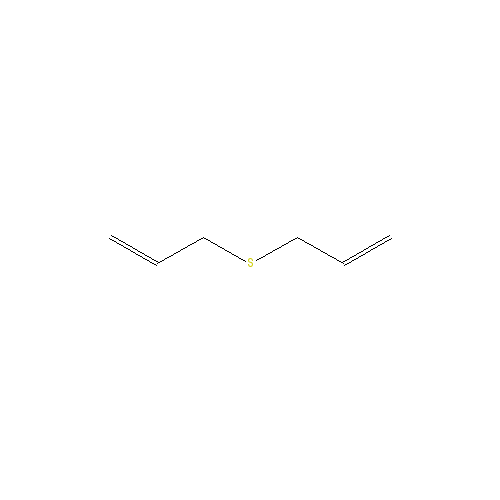
Di-(2-propenyl) sulfide
Allyl sulfide · Thioallyl ether
化学組成 · Constituent
Diallyl sulfide occurs at low levels in garlic and mustard oils. It is less toxic than diallyl disulfide and shows pronounced protective activity.
Skin. A 0.5 percent patch test on 22 volunteers produced no irritation or sensitization. Undiluted, it was extremely irritating to rabbit skin. In garlic-sensitive patients it caused no sensitization reactions.
Oral. Acute oral LD50 in mice is 2.03 g/kg (male) and 1.81 g/kg (female), in rats 2.98 g/kg. Acute dermal LD50 in rabbits exceeds 5 g/kg.
Cardiovascular. Strong antiplatelet aggregation activity in vitro.
Liver. Protects against paracetamol- and aflatoxin B1-induced liver toxicity. Much less cytotoxic to hepatocytes than diallyl disulfide.
Cancer. Significant chemopreventive activity across multiple animal models, including colon, lung, skin, esophageal, liver and breast cancers.
| Mustard | 0 – 5.5 % |
| Garlic | 1.1 – 2.4 % |
Diallyl sulfide is mainly metabolized to allyl methyl sulfide in rat hepatocytes. The compound induces phase II detoxifying enzymes such as quinone reductase and glutathione S-transferase.
Diallyl sulfide shows more pronounced protective activity than diallyl disulfide, being both hepatoprotective and chemopreventive without significant hepatocyte toxicity.