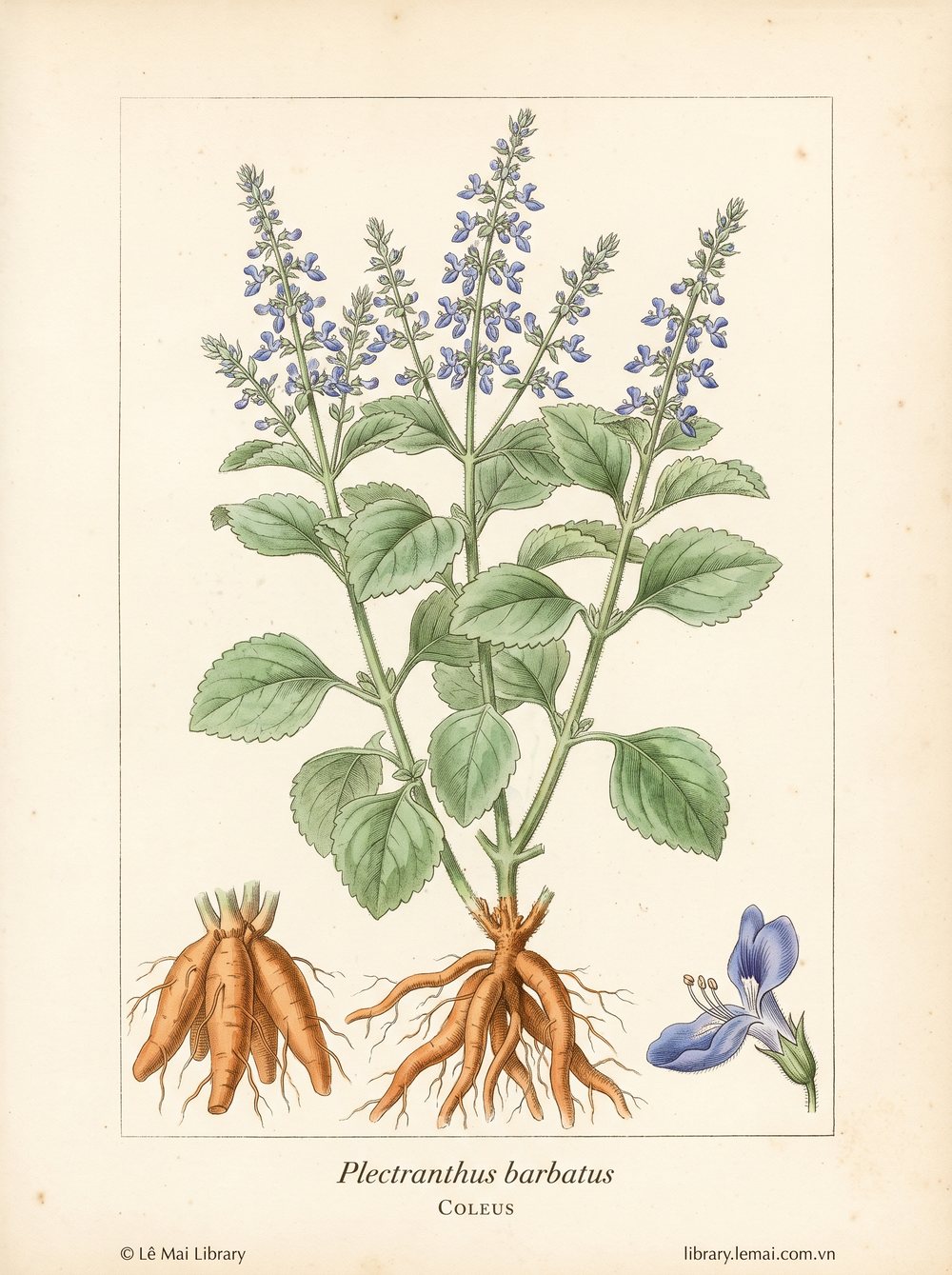
コレウス
Húng chanh, Coleus forskohlii
Plectranthus barbatus
Forskohlii, Coleus barbatus, Coleus forskohlii
No specific contraindications in available data.
No information on dermal reactions or acute toxicity.
Bornyl acetate, one of the major constituents, is non-toxic.
β-Sesquiphellandrene and γ-eudesmol display antitumoral properties in research.
| Bornyl acetate | 15.0 % |
| β-Sesquiphellandrene | 13.2 % |
| γ-Eudesmol | 12.5 % |
| 3-Decanone | 7.0 % |
| α-Gurjunene | 5.0 % |
| α-Selinene | 4.4 % |
| Cedran-8-ol | 2.8 % |
| γ-Elemene | 2.5 % |
| Isolongifolene | 2.5 % |
| (Z)-α-Bergamotene | 2.4 % |
| Camphene | 2.2 % |
| α-Pinene | 1.9 % |
| Bicyclogermacrene | 1.5 % |
| (Z)-Calamenene | 1.5 % |
| β-Pinene | 1.5 % |
Plectranthus barbatus (synonym Coleus forskohlii) is a perennial herb of India and Sri Lanka. The root contains forskolin, a medically-researched compound with pharmacological activity.
The US Sabinsa corporation holds patent US Patent #6,607,712 covering CO2 extraction of the plant, describing methods to produce antimicrobial compositions for acne and dental caries prevention.
Family Lamiaceae. The sustainability of the wild-grown plant in India is threatened by harvesting for medicinal use.
Essential oil (distilled) production is limited, the plant is mainly cultivated for forskolin extraction rather than aromatic oil.