Piperitone
3-Methyl-6-(1-methylethyl)-2-cyclohexen-1-one
3-Carvomenthenone · p-Menth-1-en-3-one
化学組成 · Constituent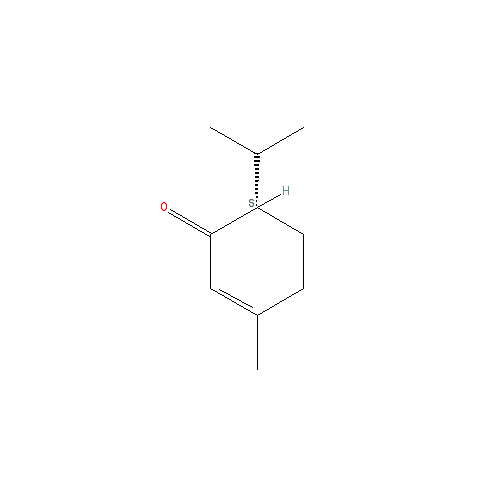
3-Methyl-6-(1-methylethyl)-2-cyclohexen-1-one
3-Carvomenthenone · p-Menth-1-en-3-one
化学組成 · Constituent
Piperitone is isomeric with pulegone but considerably less toxic. Available data indicates it is safe at standard concentrations.
Skin. Undiluted material was moderately irritating to rabbit skin. At 10 percent on 25 volunteers it was neither irritating nor sensitizing.
Oral. Acute oral LD50 in rats was 3.55 g/kg. Acute dermal LD50 in rabbits exceeded 5 g/kg. Subcutaneous LD50 in mice was 1.42 g/kg.
Nervous system. High subcutaneous doses reduced sleep duration in mice, but even lethal doses did not cause seizures.
Mutagenicity. Not mutagenic in the Ames test.
| Eucalyptus (peppermint) | 54.5 % |
| Calamint (lesser) | 0 – 7.4 % |
| Eucalyptus (radiata) | 0.4 – 4.7 % |
| Cornmint | 0.6 – 3.8 % |
| Jamrosa | 3.4 % |
| Catnip | 0 – 1.5 % |
| Verbena (white) | 0.7 – 1.4 % |
| Peppermint | 0 – 1.3 % |
| Oregano (Mexican) | 0.9 – 1.2 % |
The metabolism of piperitone has received little study. In sheep given 9.3 g of piperitone orally, thymol, diosphenol, carvotanacetone and unchanged piperitone were identified in urine.
Piperitone defines the sharp minty character of eucalyptus peppermint oil.