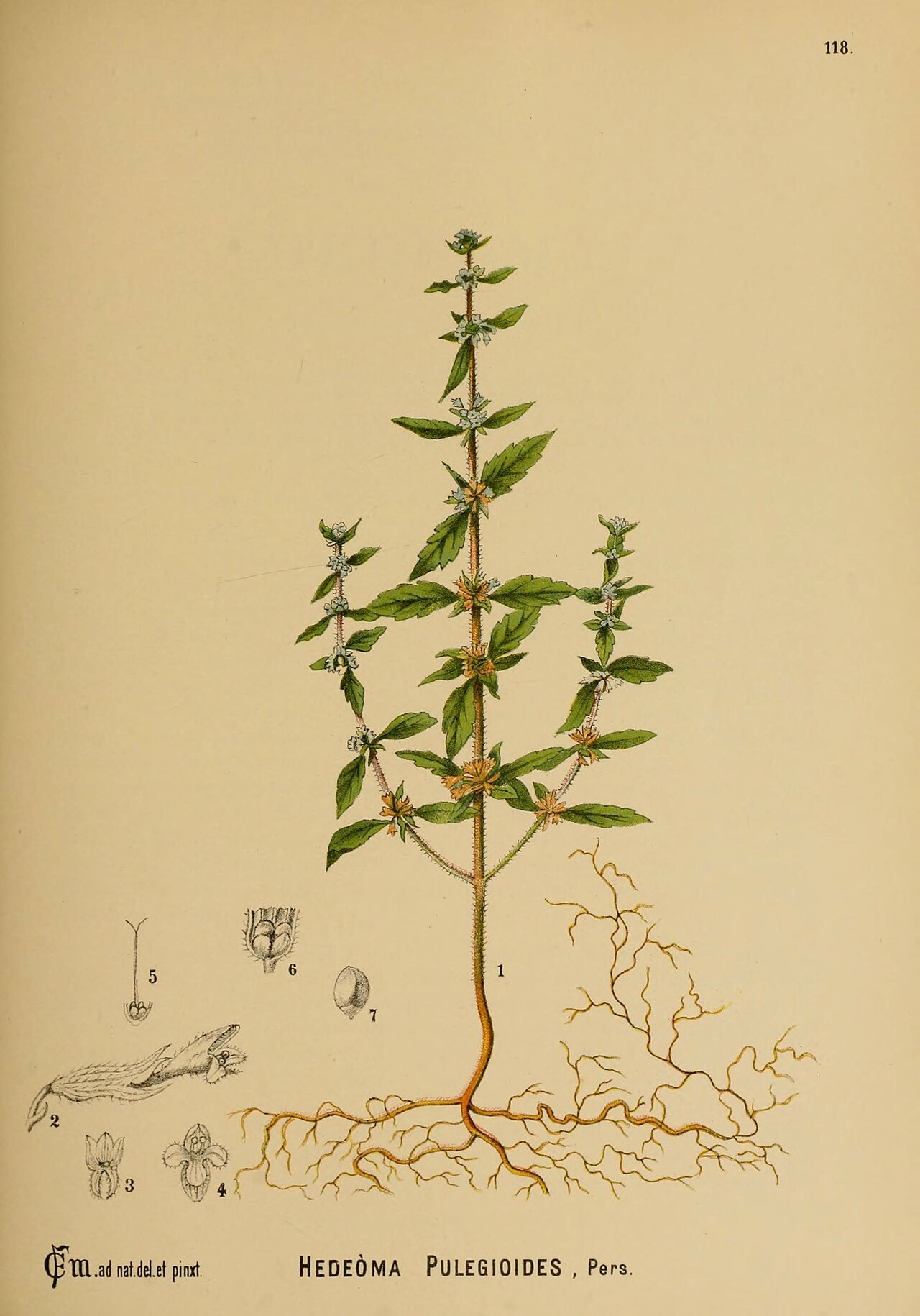
ペニーロイヤル
Bạc hà hoa
Hedeoma pulegioides / Mentha pulegium / Micromeria fruticosa
N. American pennyroyal, European pennyroyal, Turkish pennyroyal
(1R)-(+)-β-Pulegone comprises 60-87 percent. Pulegone and menthofuran are serious hepatotoxic and neurotoxic agents.
STRICTLY CONTRAINDICATED in pregnancy and breastfeeding, by all routes.
DO NOT use orally. Multiple fatalities have resulted from oral pennyroyal oil used as an abortifacient or by accident.
Neurological symptoms can occur in overdose, seizures.
The Council of Europe classifies pulegone and menthofuran as hepatotoxic and sets a group TDI of 0.1 mg/kg body weight.
In mice given ip 400-600 mg/kg of pennyroyal oil: moderate necrosis of pulmonary epithelial cells.
| (1R)-(+)-β-Pulegone | 61.3 – 86.7 % |
| Isomenthone | 0.8 – 31.0 % |
| Menthone | 0.6 – 16.0 % |
| Piperitenone | 0.2 – 4.7 % |
| (+)-Limonene | 0.1 – 1.9 % |
Pennyroyal comprises three different species: Hedeoma pulegioides (N. American), Mentha pulegium (European), Micromeria fruticosa (Turkish). Chemistry is similar, pulegone-rich.
Traditionally used as a digestive aid and insect repellent. In ancient Greek and Roman culture, pennyroyal was used but already known to be hazardous.
Family Lamiaceae.
The most dangerous essential oil in commercial perfumery. Not recommended for any cosmetic application.
Listed primarily as a warning, not for use.