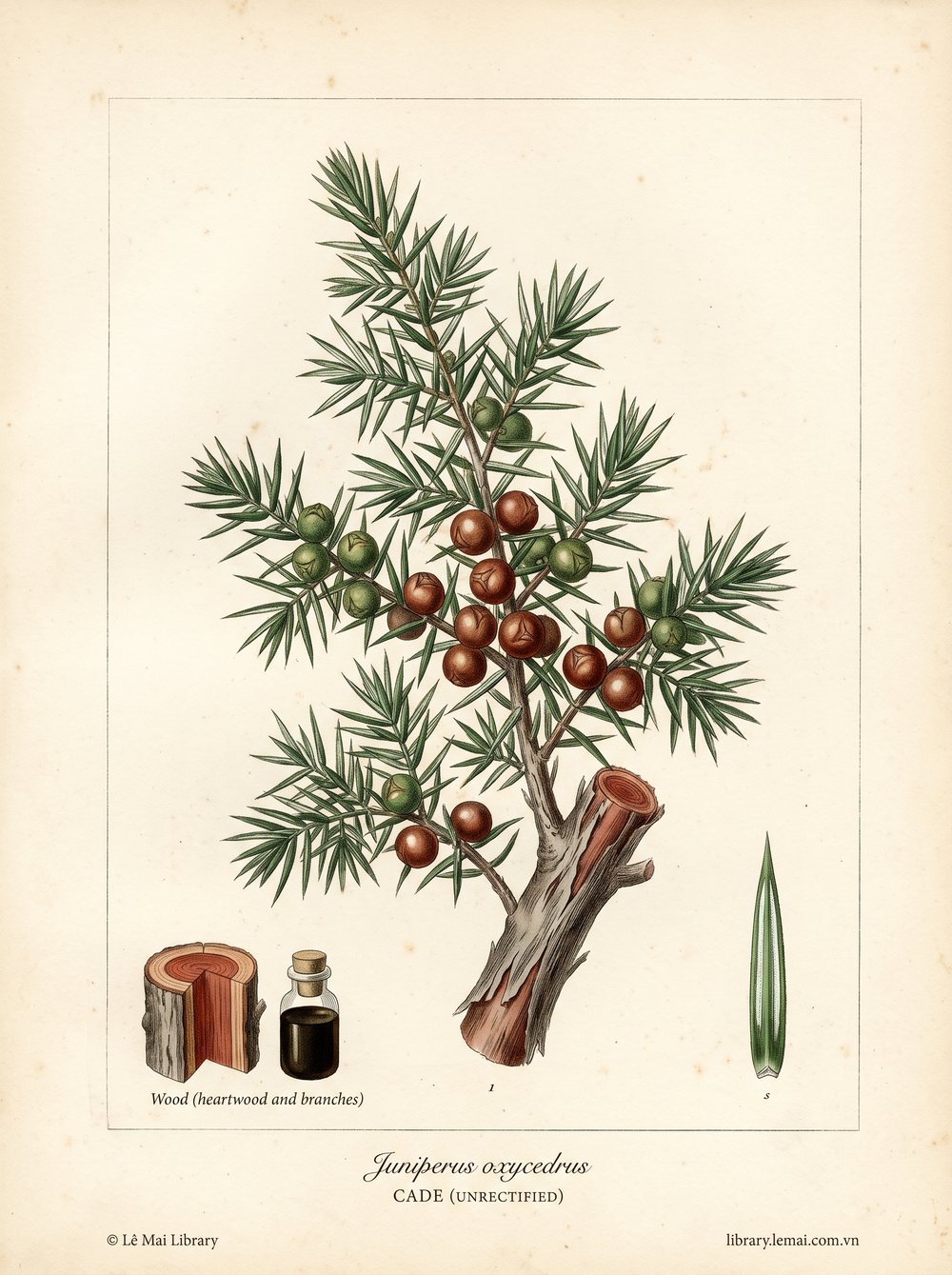
カデ アンレクティファイド
Cade, chưa tinh chế
Juniperus oxycedrus
Juniper tar (crude)
Potentially carcinogenic due to benzo[a]pyrene content.
Broad contraindication: should not be used, either internally or externally.
Crude unrectified cade oil contains benzo[a]pyrene at 8 ppm, thousands of times higher than the rectified version.
Severe poisoning has been reported from ingestion of home-made Juniperus oxycedrus extracts. Symptoms: fever, severe hypotension, renal failure, hepatotoxicity, severe facial burns. Severe poisoning of infants and young children has occurred from cade oil applied to atopic dermatitis.
| δ-Cadinene | Principal constituent |
| α-Cedrene | < 15.0 % |
| Cresols | < 2.5 % |
| Guaiacol | < 1.5 % |
| Phenol | < 0.7 % |
Unrectified cade is still produced in the Atlas mountains of Morocco, where it has been used in traditional medicine for centuries, particularly for skin lesions.
'Medicinal tar' in the traditional pharmaceutical sense is produced from Juniperus oxycedrus, J. phoenicea, J. thurifera and several other plant species.
IFRA prohibits crude cade as a fragrance ingredient. Only rectified is regulation-compliant. If a label reads 'cade oil' without specifying rectified, assume crude and do not use.