Guaiacol
1-Hydroxy-2-methoxybenzene
O-Methyl catechol · 2-Methoxyphenol · Anastil
化学組成 · Constituent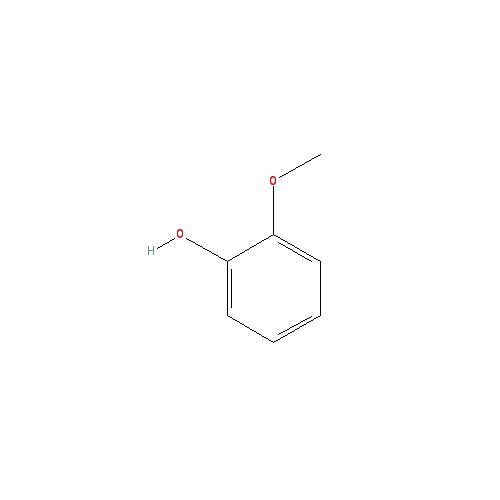
1-Hydroxy-2-methoxybenzene
O-Methyl catechol · 2-Methoxyphenol · Anastil
化学組成 · Constituent
Guaiacol is a substituted phenol of significant concern due to notable human toxicity. It is the main constituent of birch tar oil.
Skin. Applied undiluted to rabbit skin, it was moderately to severely irritating. A 2 percent patch test on 25 volunteers produced neither irritation nor sensitization. Percutaneous absorption of more than 2 g has been reported as potentially hazardous in humans.
Human toxicity. The lowest dose causing death in humans is 50 mg/kg, equivalent to 3.5 g for a 70 kg adult. Ingestion of 5 mL of guaiacol caused the death of a 9-year-old girl. Poisoning produces irritation, burning pain, vomiting, cardiovascular collapse and possibly bloody diarrhea.
Oral and dermal. Acute oral LD50 in rats is 1 to 2 g/kg, in young fasted rats 725 mg/kg. Acute dermal LD50 in rabbits is 4.6 g/kg.
Mutagenicity and cancer. Not mutagenic in the Ames test but genotoxic in several other assays. Wood creosote, a mixture containing guaiacol, was not carcinogenic in a 96- to 103-week study.
| Birch tar | Major constituent |
| Cade (unrectified) | tr – 1.5 % |
| Eucalyptus (macarthurii) | 0.8 – 1.0 % |
In rabbits, guaiacol is largely excreted in urine as sulfate and glucuronide conjugates, with some unchanged compound exhaled via the lungs. In rats, O-demethylation also occurs, yielding catechol conjugates.
Guaiacol is probably more toxic in humans than in other species. Birch tar oil is traditionally used for smoky effects and requires particular caution.