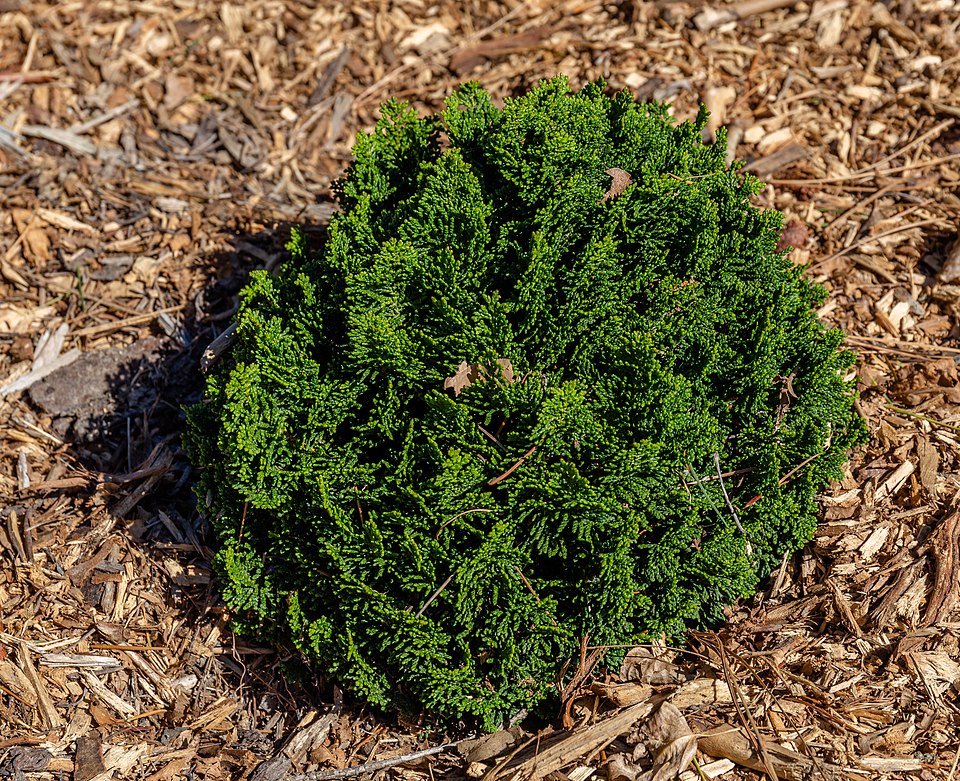
ヒノキ ウッド
Hinoki, gỗ - Cẩm tùng Nhật
Chamaecyparis obtusa var. obtusa
No specific contraindications in available data.
No information on dermal reactions for hinoki wood oil, α-cadinol or T-muurolol.
Contains no known carcinogens.
Hinoki wood oil induced CYP2B1 in rat studies, not at a level suggesting significant drug interaction.
| α-Cadinol | 20.5 % |
| T-Muurolol | 18.4 % |
| γ-Cadinene | 12.5 % |
| δ-Cadinene | 10.8 % |
| T-Cadinol | 10.6 % |
| Cadin-1(10)-en-4,β-ol | 6.8 % |
| α-Muurolene | 5.8 % |
| β-Caryophyllene alcohol | 1.5 % |
| Cadin-1(10)-en-4,α-ol | 1.0 % |
Hinoki wood oil, the most common of the hinoki oils. Limited production.
The Japanese government has protected hinoki since 1982, but wood is still available from naturally fallen trees, stocks felled before 1982, and wood recycled from old buildings.
Family Cupressaceae.