α-Cedrene
[3R-(3α,3aβ,7β,8aα)]-2,3,4,7,8,8a-Hexahydro-3,6,8,8-tetramethyl-1H-3a,7-methanoazulene
8-Cedrene · Cedr-8-ene
化学組成 · Constituent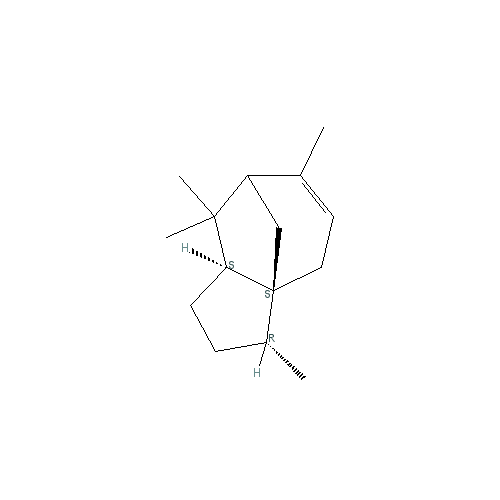
[3R-(3α,3aβ,7β,8aα)]-2,3,4,7,8,8a-Hexahydro-3,6,8,8-tetramethyl-1H-3a,7-methanoazulene
8-Cedrene · Cedr-8-ene
化学組成 · Constituent
α-Cedrene is a major sesquiterpene of cedarwood oils (Texan, Virginian, Himalayan).
Skin. A 5 percent patch test on 25 volunteers caused no irritation or sensitization.
Oral. Acute oral LD50 in rats exceeds 5 g/kg; rabbit dermal LD50 exceeds 5 g/kg.
Subchronic. Cedrene significantly induces CYP and ethylmorphine N-demethylase (EMND) by intraperitoneal, oral or inhalation routes. Oral 200 mg/kg/day for three days increased ethylmorphine metabolism by 160 percent and CYP content by 40 percent. This raises a theoretical drug interaction with opioid analgesics.
Reproductive. Acetyl cedrene (related compound) at gavage 25–100 mg/kg/day on gestation days 7–17 gave maternal and developmental NOAELs of 50 and 100 mg/kg/day.
Mutagenicity. Non-mutagenic in Salmonella TA98 and TA100. Moderate cytotoxicity against HL60 leukemia cells (IC50 22.20 μg/mL).
| Cedarwood (Virginian) | 21.1 – 38.0 % |
| Cedarwood (Texan) | 22.6 – 30.7 % |
| Cedarwood (Himalayan) | 15.8 % |
| Cade (rectified) | < 15.0 % |
| Cade (unrectified) | < 15.0 % |
| Cedarwood (Chinese) | 2.1 % |
α-Cedrene is the structural carrier of the classical cedarwood note in perfumery. Its CYP induction activity is worth noting, although the clinical impact from practical essential oil exposure is unclear.