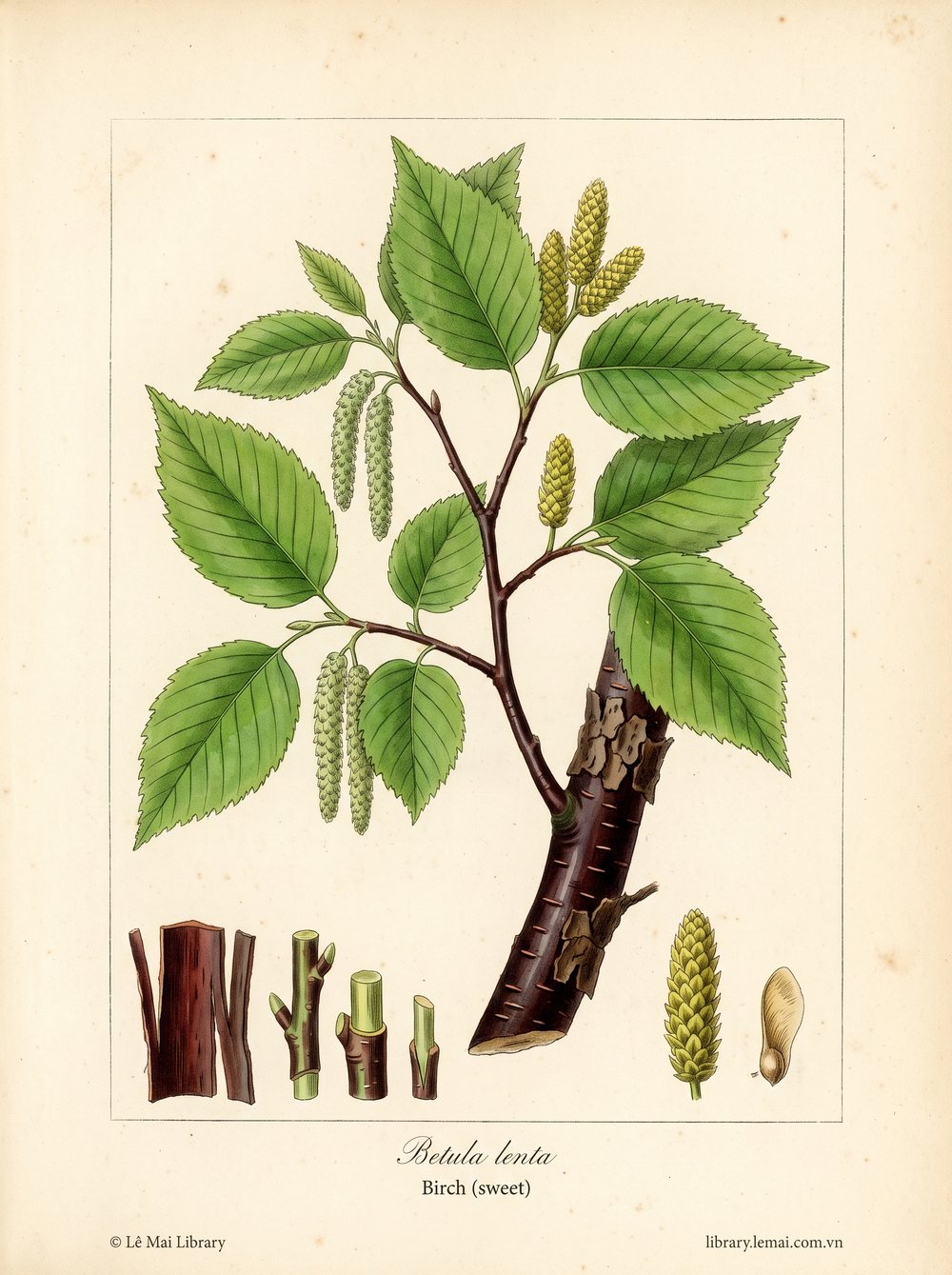
スウィートバーチ
Bạch dương ngọt
Betula lenta
Black birch, Cherry birch, Mahogany birch, Southern birch
Drug interactions. Inhibits blood clotting. Toxicity. High doses may be teratogenic.
Broad contraindications: anticoagulant medication, before major surgery, hemophilia, other bleeding disorders.
Pregnancy, breastfeeding. Should not be used on or given to children. Should not be given to those with salicylate sensitivity (often applies in ADD/ADHD).
Oral: avoid in gastroesophageal reflux disease.
Maximum adult oral dose 182 mg daily. Maximum dermal use level 2.5 percent.
Dermal absorption is sufficient to cause poisoning. Numerous deaths have been recorded from accidental ingestion of wintergreen oil or methyl salicylate. 4, 8 mL is a lethal dose for a child.
| Methyl salicylate | 90.4 % |
| Ethyl salicylate | 5.5 % |
| Linalyl acetate | 1.1 % |
Betula lenta is the sweet birch of eastern North America. The essential oil does not pre-exist in the bark but forms through reaction between gaultherin (a glucoside) and betulase (an enzyme) when the bark is soaked in water before distillation.
Many commercial 'sweet birch oils' are in fact synthetic methyl salicylate.
Family Betulaceae. Chemically allied to wintergreen (Gaultheria procumbens), both are methyl salicylate-rich with similar toxicity risk.
Methyl salicylate is present in many liniments, mouthwashes, inhalants, and as a flavor additive in soft drinks.
Signs of methyl salicylate poisoning: CNS excitation, rapid breathing, fever, high blood pressure, convulsions, coma. Death results from respiratory failure after a period of unconsciousness.