ナスタチウム
Sen cạn
Tropaeolum majus
Indian cress, Tropaeolum
Benzyl isothiocyanate comprises 72 percent. Mild reproductive toxicity at high doses in rat studies.
Recommendation: maximum daily oral dose in pregnancy and breastfeeding 8.7 mg. Maximum dermal use in pregnancy 0.26 percent.
General maximum dermal use 0.5 percent.
Benzyl isothiocyanate has anticarcinogenic activity.
| Benzyl isothiocyanate | 72.3 % |
| Benzyl cyanide | 5.0 – 12.0 % |
| Benzyl alcohol | 1.0 – 5.0 % |
| Benzaldehyde | 0.5 – 2.0 % |
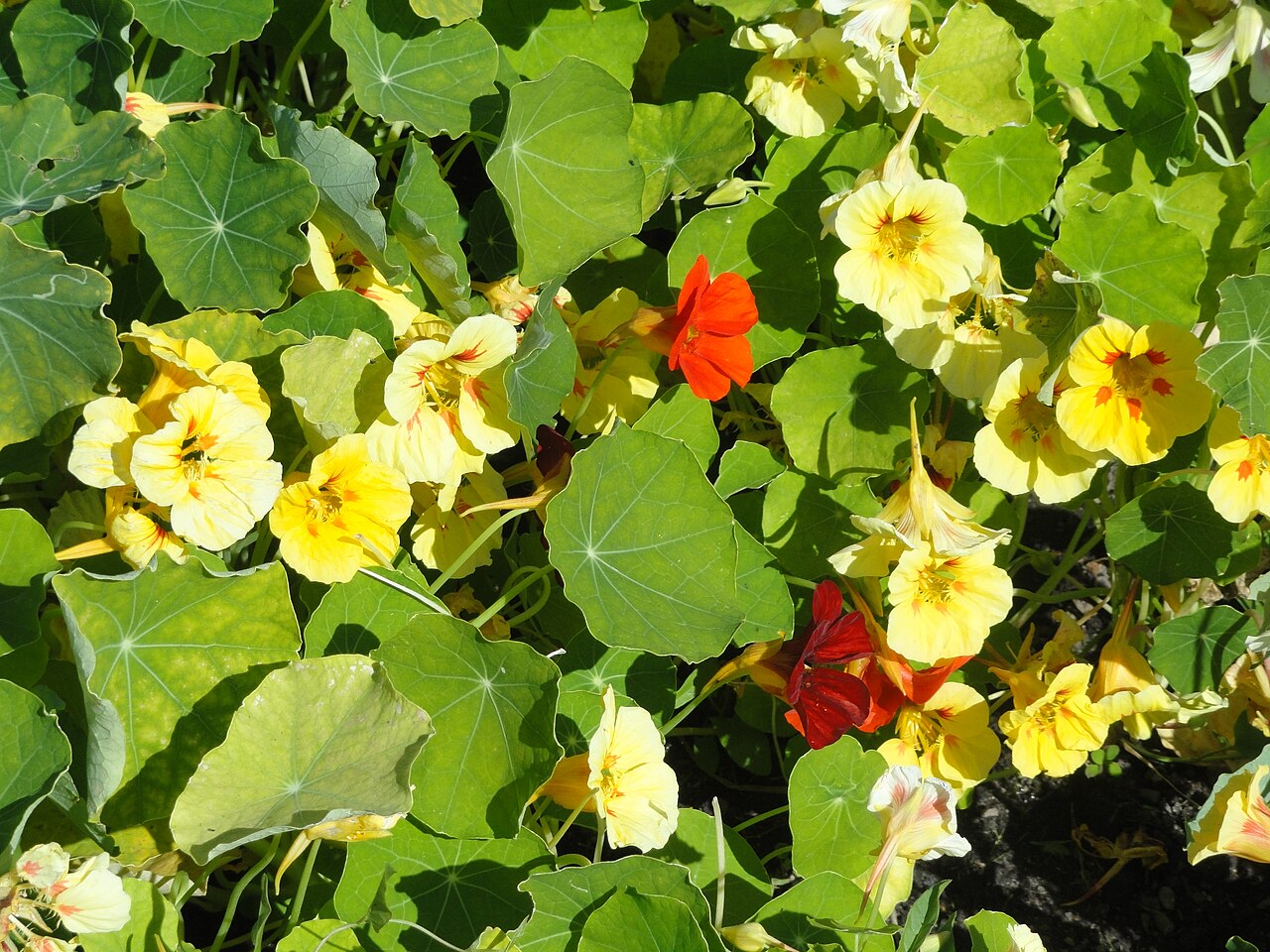
Tropaeolum majus is a flower commonly grown in European gardens. The flowers are orange, red, or yellow, and edible. The plant originates from South America (Andes of Peru, Bolivia).
The absolute is extracted from flowers and leaves. Very limited production.
Family Tropaeolaceae.
Fresh leaves and flowers are eaten in salads, with a mild mustard-like pungency, from glucotropaeolin converting to benzyl isothiocyanate when chewed.
In perfumery, nasturtium absolute is a special green-spicy note, niche.