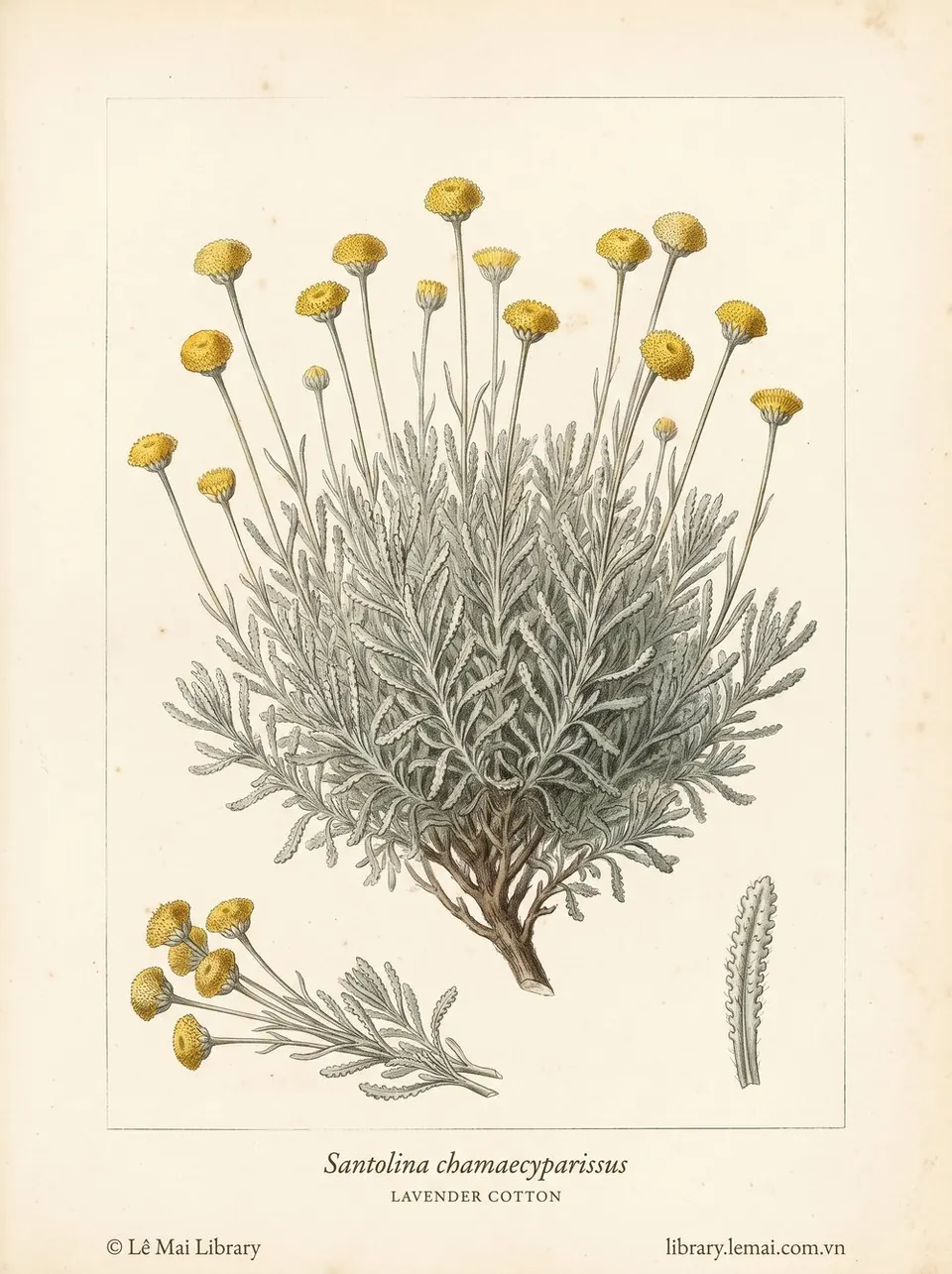
ラベンダーコットン
Oải hương cotton
Santolina chamaecyparissus
Cotton lavender, Santolina
Lavender cotton essential oil is steam-distilled from the seeds of Santolina chamaecyparissus, a small shrub in the daisy family from the western Mediterranean; despite the name, it is not related to lavender. Its main component is artemisia ketone (about 30.6 to 45%). Use it on skin only at low concentrations, and avoid it in pregnancy, while breastfeeding and for children under 6.
Updated 6 Nov 2026 · Lê Mai Team
Contains artemisia ketone above 30 percent. Monoterpene ketones have potential neurotoxicity.
Limited safety data. Not recommended in pregnancy, breastfeeding, or for children under 6.
Recommended for dermal use at low concentrations only.
| Artemisia ketone | 30.6 – 45.0 % |
| β-Phellandrene | 5.0 – 17.9 % |
| β-Myrcene | 3.6 – 15.0 % |
| Longiverbenone | 9.1 – 10.2 % |
| Sabinene | 3.9 – 5.5 % |
| β-Pinene | 2.9 – 5.2 % |
| Camphor | 1.5 – 2.6 % |
Santolina chamaecyparissus is a small shrub with grey-silver leaves and yellow flowers. Not botanically related to lavender, the name reflects its appearance and reminiscent scent.
Grows in the western Mediterranean. Cultivated as an ornamental in European gardens.
Family Asteraceae (Compositae), same family as daisy and artemisia.
Oil production is small and niche. Traditionally used as a clothing-moth deterrent (like true lavender).
Botanically and chemically distinct from all Lavandula species.