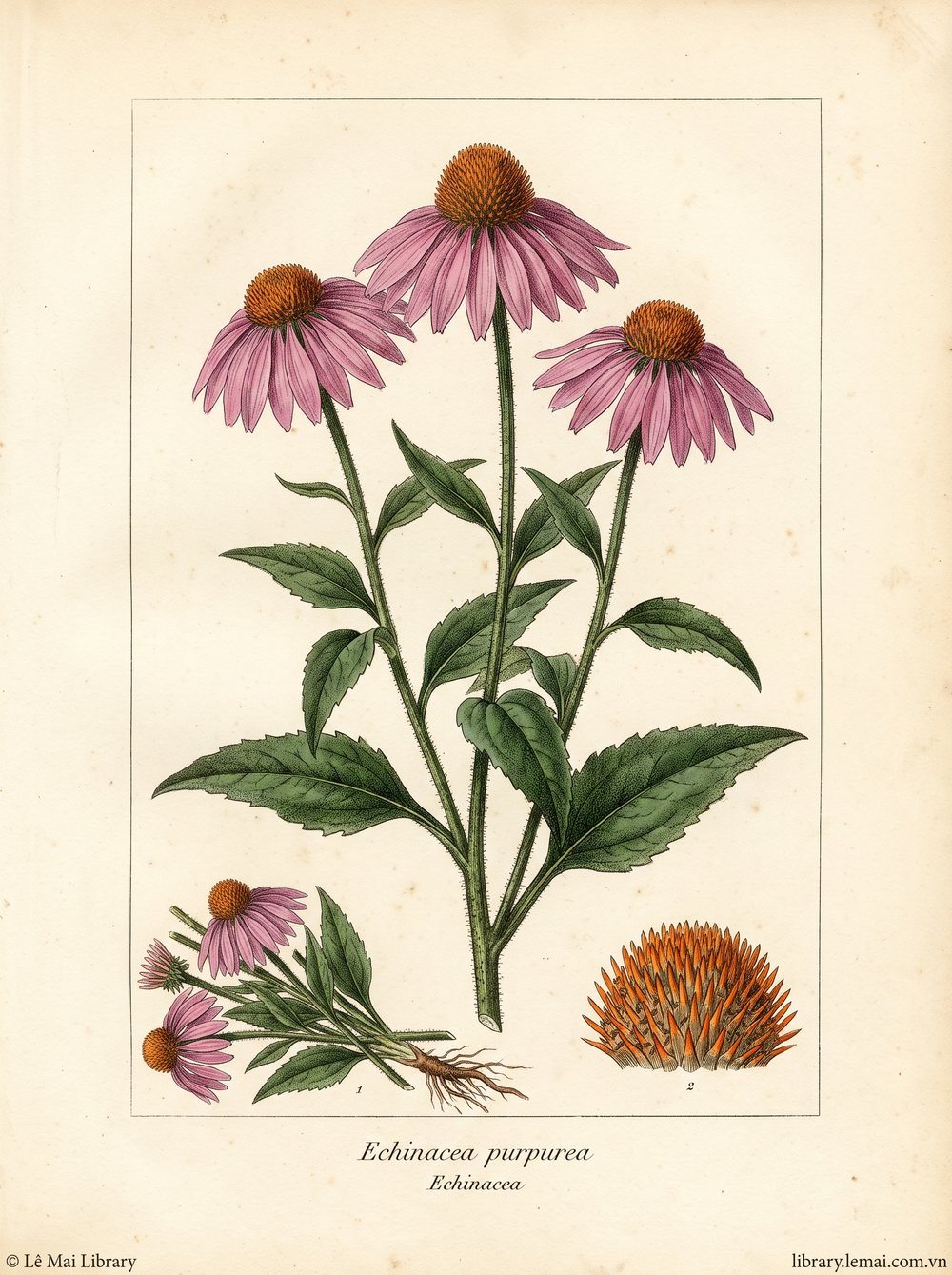
エキナセア
Cúc dại tím
Echinacea purpurea
Purple coneflower, Brauneria purpurea, Rudbeckia purpurea
No specific contraindications in available data.
No information on dermal reactions or acute toxicity for echinacea oil or germacrene D.
Contains no known carcinogens. α-Caryophyllene displays anticarcinogenic activity.
| Germacrene D | 44.6 % |
| β-Caryophyllene | 4.5 % |
| δ-Cadinene | 3.4 % |
| Caryophyllene oxide | 3.0 % |
| β-Myrcene | 2.5 % |
| α-Phellandrene | 2.3 % |
| Bicyclogermacrene | 1.5 % |
| α-Caryophyllene | 1.5 % |
| (E)-α-Bergamotene | 1.4 % |
| γ-Cadinene | 1.1 % |
| α-Muurolene | 1.1 % |
| Spathulenol | 1.0 % |
Echinacea purpurea is a perennial herb of North America. The name 'purple coneflower' reflects the purple petals with a conical center.
The oil is steam-distilled from the whole plant. Very limited production, as most echinacea is consumed as aqueous or alcoholic extracts for immune support.
Family Asteraceae. Same family as chamomile and costus.
Echinacea essential oil is uncommon in perfumery. The famed immune effects of echinacea come from alkamides and polysaccharides in aqueous/alcoholic extracts, not from the aromatic essential oil.