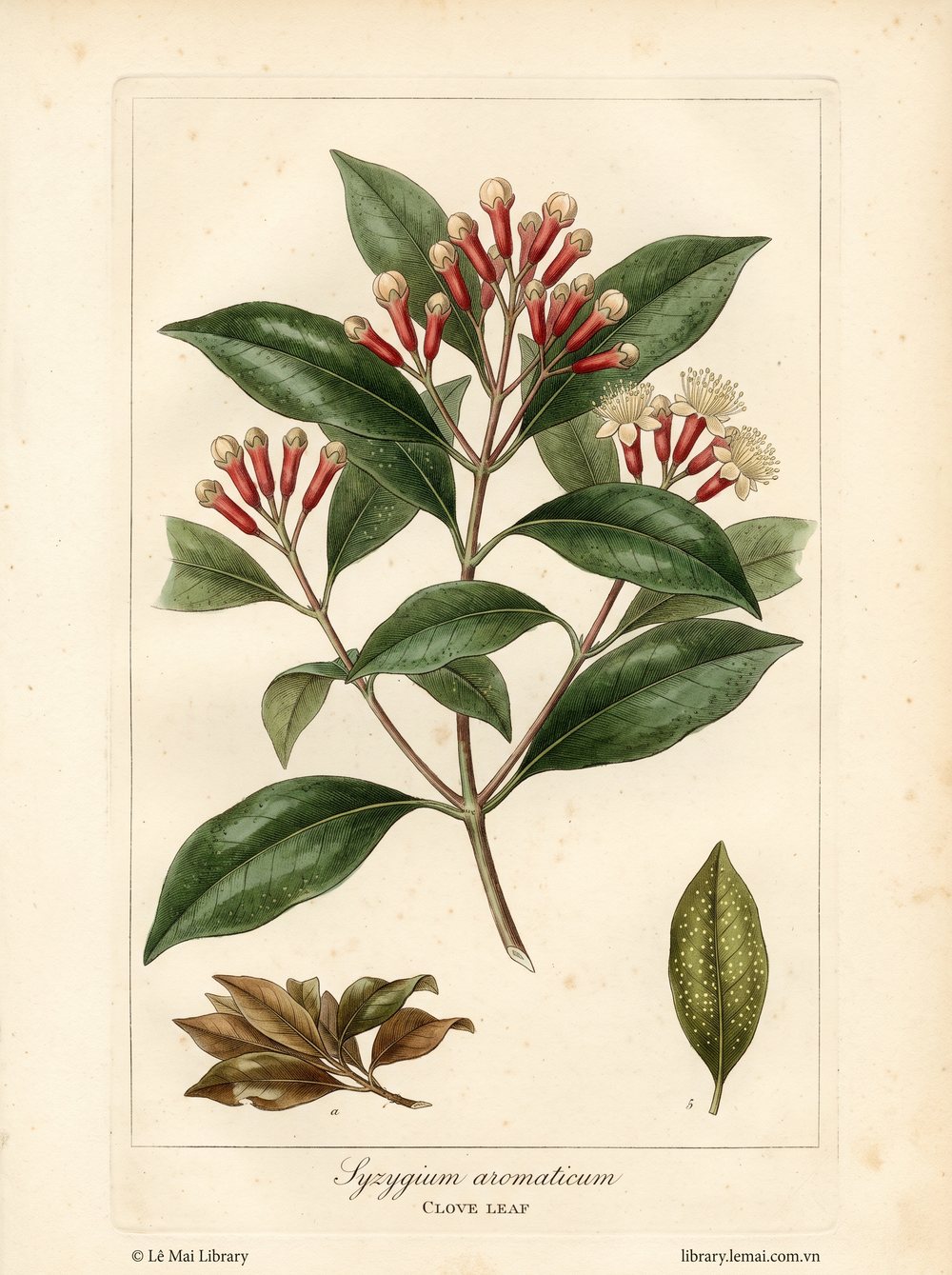
クローブリーフ
Đinh hương (lá)
Syzygium aromaticum
Eugenia caryophyllata, Eugenia aromatica
Drug interactions. May inhibit blood clotting. Embryotoxic. Moderate risk of skin and mucous membrane sensitization.
Oral: pethidine, MAOIs, SSRIs, anticoagulant medication, before major surgery, peptic ulcer, hemophilia.
Dermal: avoid on hypersensitive, diseased or damaged skin, and on children under 2 years.
Maximum dermal use level 0.6 percent based on 88 percent eugenol and a dermal limit of 0.5 percent.
Clove leaf oil is significantly cheaper than bud but has a coarser aroma. In perfumery often used for eugenol isolation.
| Eugenol | 77.0 – 88.0 % |
| β-Caryophyllene | 3.5 – 6.4 % |
| α-Caryophyllene | 0.8 – 1.4 % |
| Eugenyl acetate | tr – 1.2 % |
| Isoeugenol | tr |
Same Syzygium aromaticum tree as clove bud, distilled from leaves. Heavier, hotter aroma than bud, less refined.
Main production in Madagascar and Indonesia. Clove leaf oil is largely used as an industrial eugenol source.
Family Myrtaceae.
May be adulterated with clove stem oil.