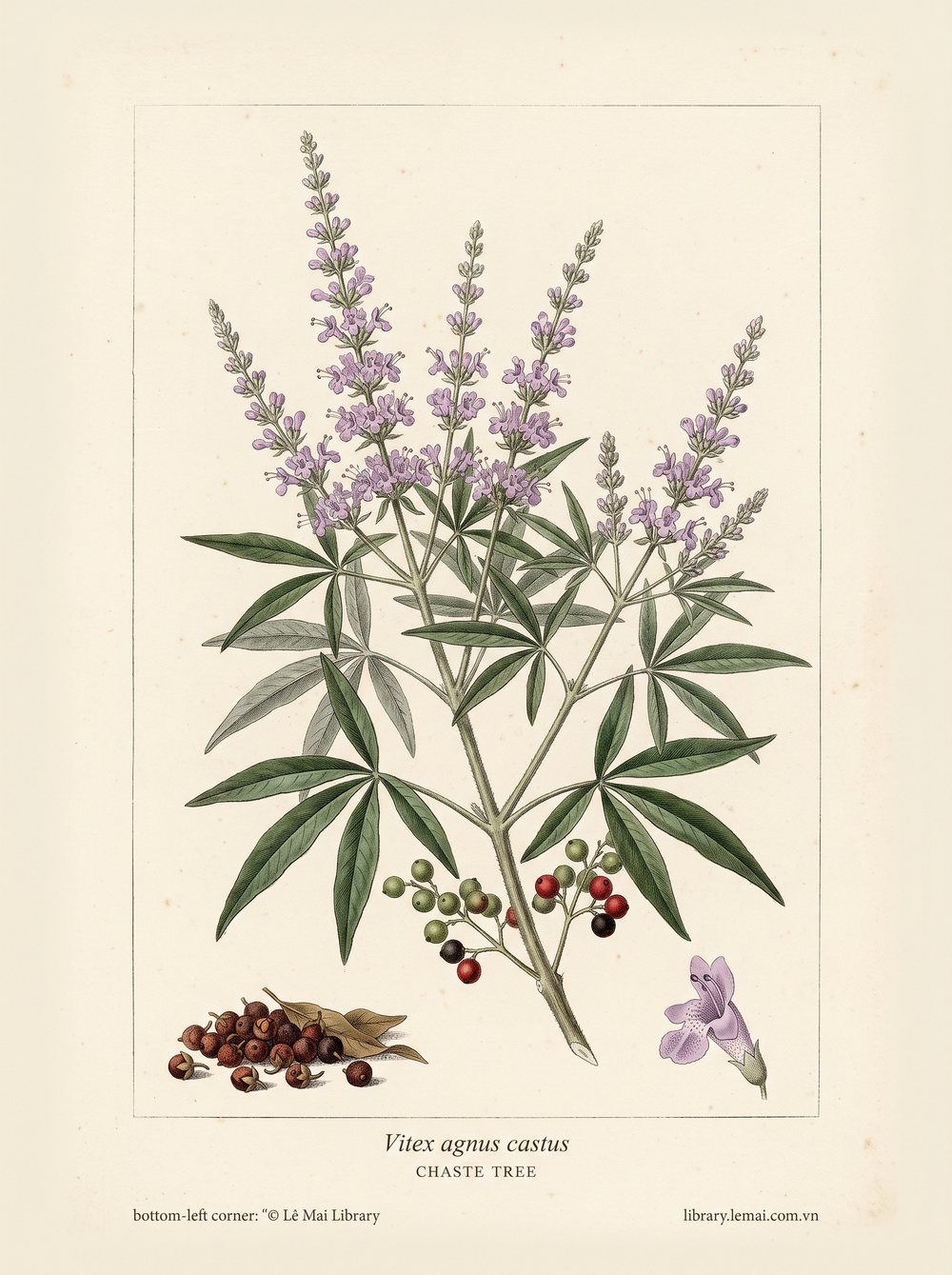
チェイストツリー
Cây trinh nữ
Vitex agnus castus
Monk's pepper
Drug interactions. Reproductive hormone modulation. May contain methyleugenol.
Broad contraindications: progesterone therapy, pregnancy, breastfeeding, prepubertal children.
May cause unpleasant side effects in some women.
Oral: drugs metabolized by CYP2D6, estrogen replacement therapy, oral contraceptives.
In clinical research, 23.2 percent of women using chaste tree oil experienced symptom exacerbation (emotional decline, increased bleeding, hot flashes). Women using it concurrently with progesterone (including creams) consistently experienced breakthrough bleeding.
Chaste tree extract exhibits dopaminergic activity, lowering serum estrogen and raising progesterone. This activity may partly reside in the essential oil.
| 1,8-Cineole (leaf) | 15.6 – 35.2 % |
| Sabinene (seed) | 7.1 – 44.1 % |
| α-Pinene (seed) | 1.2 – 23.1 % |
| β-Caryophyllene | 0.8 – 9.3 % |
| α-Terpineol | 0.2 – 9.3 % |
| (+)-Limonene | 0.1 – 7.4 % |
| Citronellyl acetate | 0.2 – 7.8 % |
| Methyleugenol | 0 – 1.7 % |
Vitex agnus castus is a small Mediterranean shrub. Two oils are produced: from leaves and from seeds, each with distinct chemistry.
Main commercial source is Croatia. Also produced in Turkey.
Family Verbenaceae (genus formerly Verbenaceae, now reclassified to Lamiaceae in some treatments). Non-commercial Italian and Cypriot oils contain methyleugenol; commercial Croatian oil does not.
Several varieties of Vitex negundo (Chinese chaste tree) grown in China yield oils; none toxicologically significant, with β-caryophyllene typically the major constituent.