β-Citronellyl acetate
3,7-Dimethyl-6-octen-1-yl ethanoate
Citronellol acetate · Acetic acid citronellyl ester
化学組成 · Constituent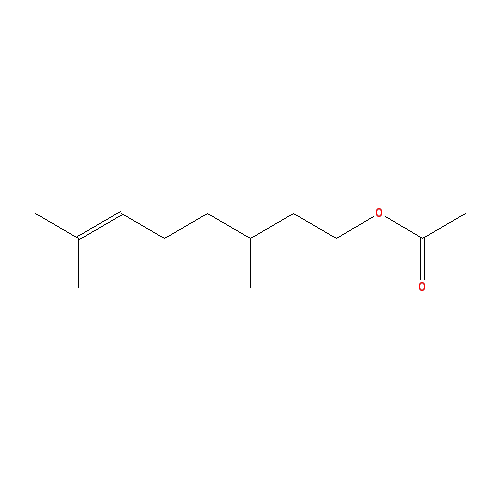
3,7-Dimethyl-6-octen-1-yl ethanoate
Citronellol acetate · Acetic acid citronellyl ester
化学組成 · Constituent
β-Citronellyl acetate is the ester of citronellol. The compound presents low toxicity risk.
Skin. Undiluted on rabbit skin under 24-hour occlusion was irritating. A 4 percent patch test on 25 volunteers was mildly irritant and non-sensitizing.
Oral and dermal. Acute oral LD50 in rats is 6.8 g/kg; rabbit dermal LD50 exceeds 2 g/kg.
Carcinogenicity. In a two-year study with a geranyl acetate/citronellyl acetate 71/29 mixture in rats and mice five times per week at 500–2,000 mg/kg, the compound was not classified as carcinogenic. A marginal increase in skin papillomas and renal tubular adenomas appeared in male rats at high doses but was not statistically significant.
| Lemon-scented gum | tr – 9.7 % |
| Chaste tree | 0.2 – 7.8 % |
| Citronella | 0.9 – 7.3 % |
| Combava leaf | 0.9 – 5.1 % |
| Angelica root (Himalayan) | 2.2 – 3.4 % |
| Rose (Damask) | 0.2 – 2.8 % |
| Combava fruit | 0.5 – 1.5 % |
β-Citronellyl acetate contributes soft rose and fresh citrus notes to geranium and rose oils. The compound serves as a natural fixative for top notes.