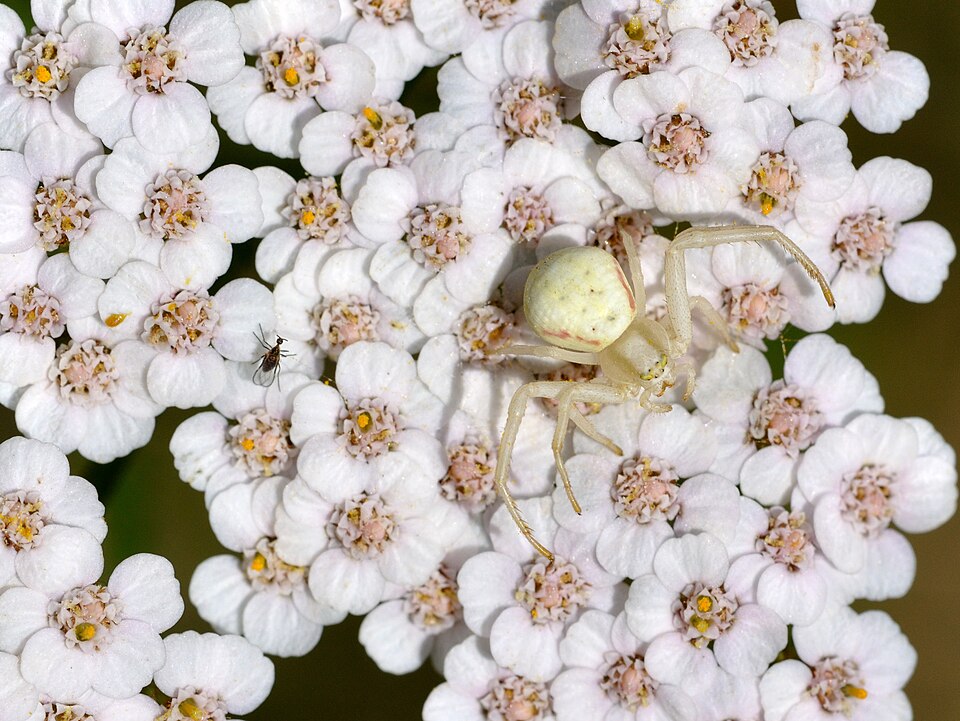
ヤロー カマズレン
Cỏ thi
Achillea millefolium
Common yarrow, Milfoil
Chamazulene 30-45 percent, gives the characteristic deep blue color. Anti-inflammatory activity.
Total thujone up to 2.9 percent, slight neurotoxicity. Recommended max 8.6 percent dermal, 241 mg oral.
Drug interactions via chamazulene CYP1A2, CYP3A4, CYP2D6 inhibition.
Use orally with caution alongside drugs metabolized by these enzymes.
| Chamazulene | 30.0 – 45.0 % |
| Sabinene | 10.0 – 22.0 % |
| β-Pinene | 5.0 – 12.0 % |
| Terpinen-4-ol | 3.0 – 8.0 % |
| β-Caryophyllene | 3.0 – 8.0 % |
| α-Thujone | 1.0 – 3.0 % |
Achillea millefolium grows throughout the northern hemisphere. Traditionally used as a wound-healing herb (the name 'Achillea' from the legendary Greek Achilles).
Main production: Eastern Europe (Hungary, Bulgaria), Germany.
Family Asteraceae.
Chamazulene-rich like German chamomile and blue tansy. The deep blue is visually striking but requires formulation consideration.
In cosmetics: used for anti-inflammatory skin products and sensitive skin creams.