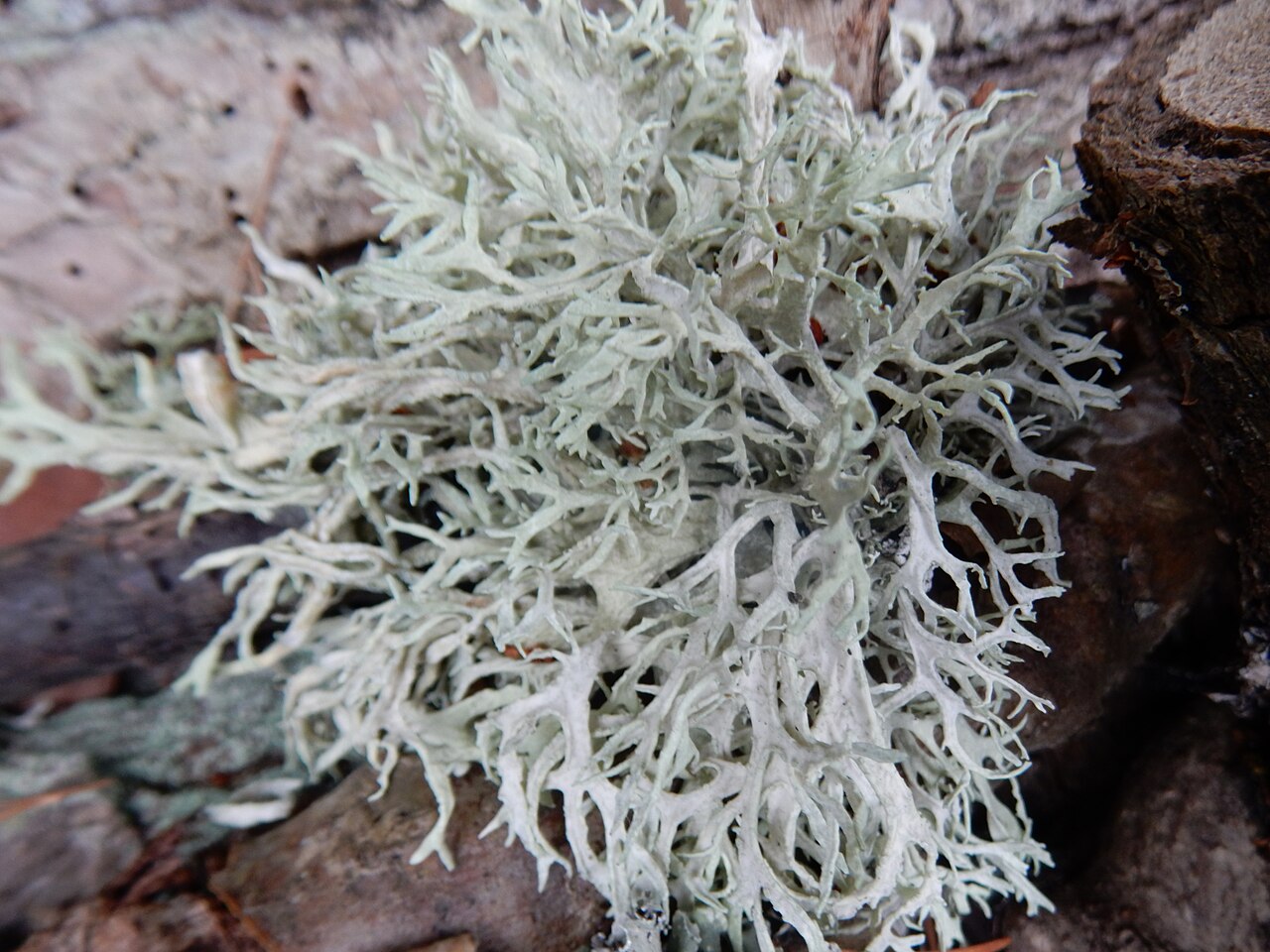
オークモス
Rêu Sồi
Evernia prunastri
Tree moss
Oakmoss contains atranol and chloroatranol, two strong skin sensitizers. IFRA restricts use to very low concentrations in fragrance.
EU also restricts, oakmoss and treemoss are on the list of allergens that must be declared on labels above 0.001 percent in leave-on or 0.01 percent in rinse-off products.
Very low dermal concentration recommended.
No pregnancy data, avoid use.
| Methyl β-orcinolcarboxylate | 15.0 – 25.0 % |
| Atranorin | 5.0 – 15.0 % |
| Atranol | 2.0 – 8.0 % |
| Chloroatranol | 0.1 – 2.0 % |
| Methyl β-orsellinate | 3.0 – 10.0 % |
| Ethyl haematommate | 1.0 – 5.0 % |
Evernia prunastri is a lichen growing on oak bark and some other tree trunks in temperate Europe and North America.
Concrete is solvent-extracted with hexane, then alcohol washing yields the absolute. Main production in France, Provence region.
Family Parmeliaceae (a lichen, not a higher plant).
Oakmoss is a classical base note in perfumery, especially in the chypre, fougère, and oriental families.
After EU and IFRA tightened limits from 2003, many classical perfumes had to be reformulated. 'Low-atranol' or 'molecular distilled' oakmoss is a version with the allergen reduced.
Characteristic aroma: woody, earthy, damp, dried-grass, with metallic depth.