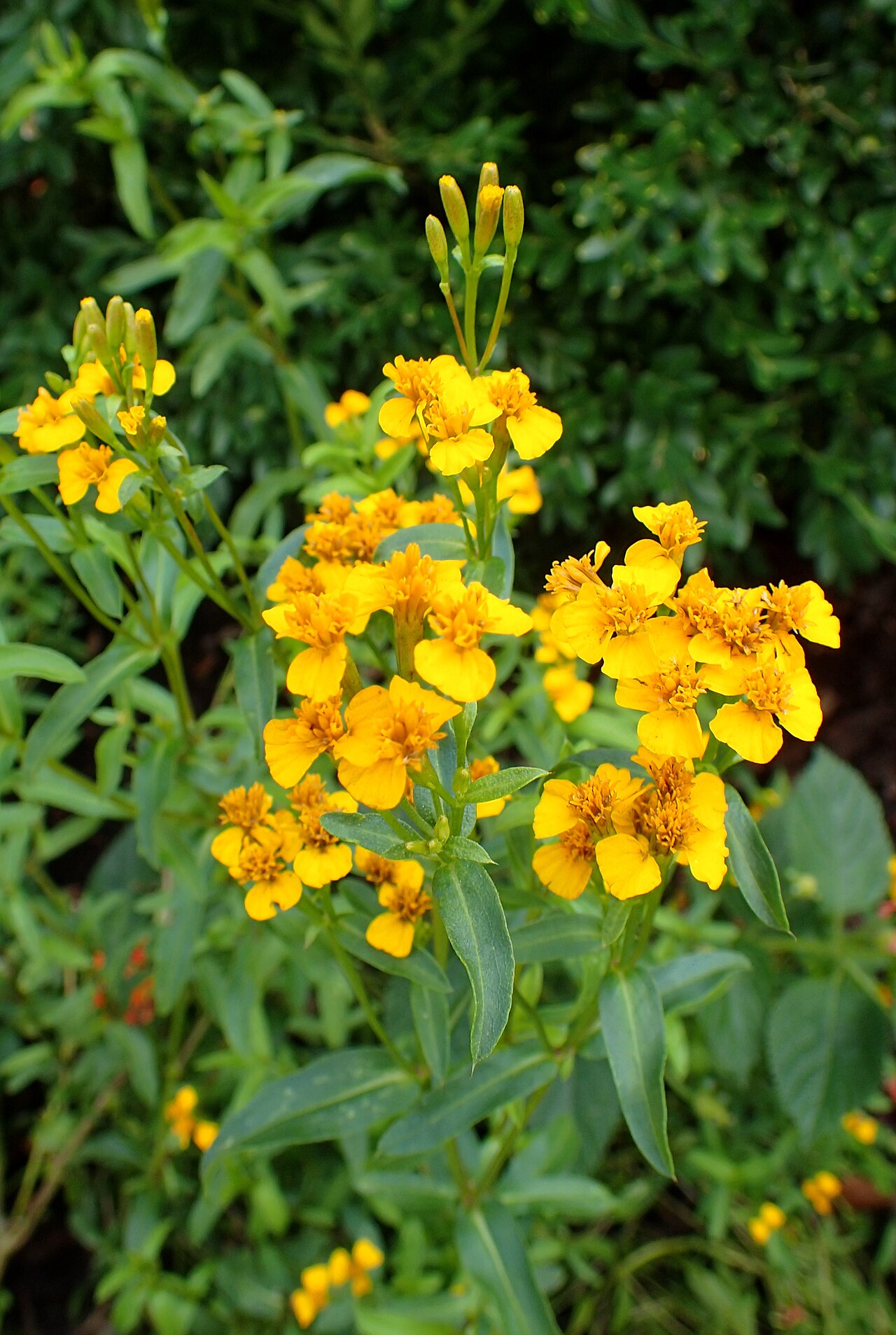
メキシカンマリーゴールド
Vạn thọ Mexico
Tagetes lucida
Sweet mace, Mexican tarragon, Yauhtli
Estragole comprises 78-94 percent. Estragole is regarded as a suspected carcinogen at high doses.
Methyl eugenol may be present (0.1-3.6 percent), also a suspected carcinogen.
Not recommended in cosmetics. Avoid oral routes.
Contraindicated in pregnancy and breastfeeding.
| Estragole | 78.2 – 93.8 % |
| β-Caryophyllene | 2.1 – 9.4 % |
| Methyleugenol | 0.1 – 3.6 % |
Tagetes lucida is native to Mexico, used as a tarragon substitute in Mexican cuisine. The name 'Mexican tarragon' reflects its tarragon-like aroma.
In Aztec culture, powdered dried leaves were thrown into the faces of sacrificial victims, reportedly to dull their senses.
Anecdotal reports describe a mild psychoactive effect when the dried herb is smoked. However, no specific active compound has been identified.
Family Asteraceae (Compositae).
Distinct from European marigold (Calendula officinalis), Calendula is an unrelated species widely used in cosmetics.
Tagetes lucida oil is niche, not recommended for mainstream cosmetics.