ジャボランジ
Jaborandi (Pilocarpus)
Pilocarpus jaborandi, Pilocarpus microphyllus
Potentially toxic.
Use with caution due to uncertain toxicity.
Jaborandi extracts and oils are prohibited as cosmetic ingredients in the EU and Canada. In the UK, jaborandi preparations can only be sold in a pharmacy under the supervision of a pharmacist (regulation since 1968).
This regulation is based on the jaborandi plant containing very powerful, potentially toxic alkaloids such as pilocarpine. Alkaloids are not generally found in essential oils, although Burfield maintains jaborandi oil contains 0.8 percent toxic alkaloids.
| (+)-Limonene (P. jaborandi) | 0 – 67.1 % |
| 2-Tridecanone | 2.4 – 60.7 % |
| β-Caryophyllene (P. microphyllus) | 23.9 – 40.6 % |
| 2-Pentadecanone | 0 – 28.1 % |
| Caryophyllene oxide | 0 – 15.4 % |
| Sandaracopimara-8(14),15-diene | 0 – 13.1 % |
| Germacrene D (P. microphyllus) | 6.6 – 10.5 % |
| Spathulenol | 0 – 7.6 % |
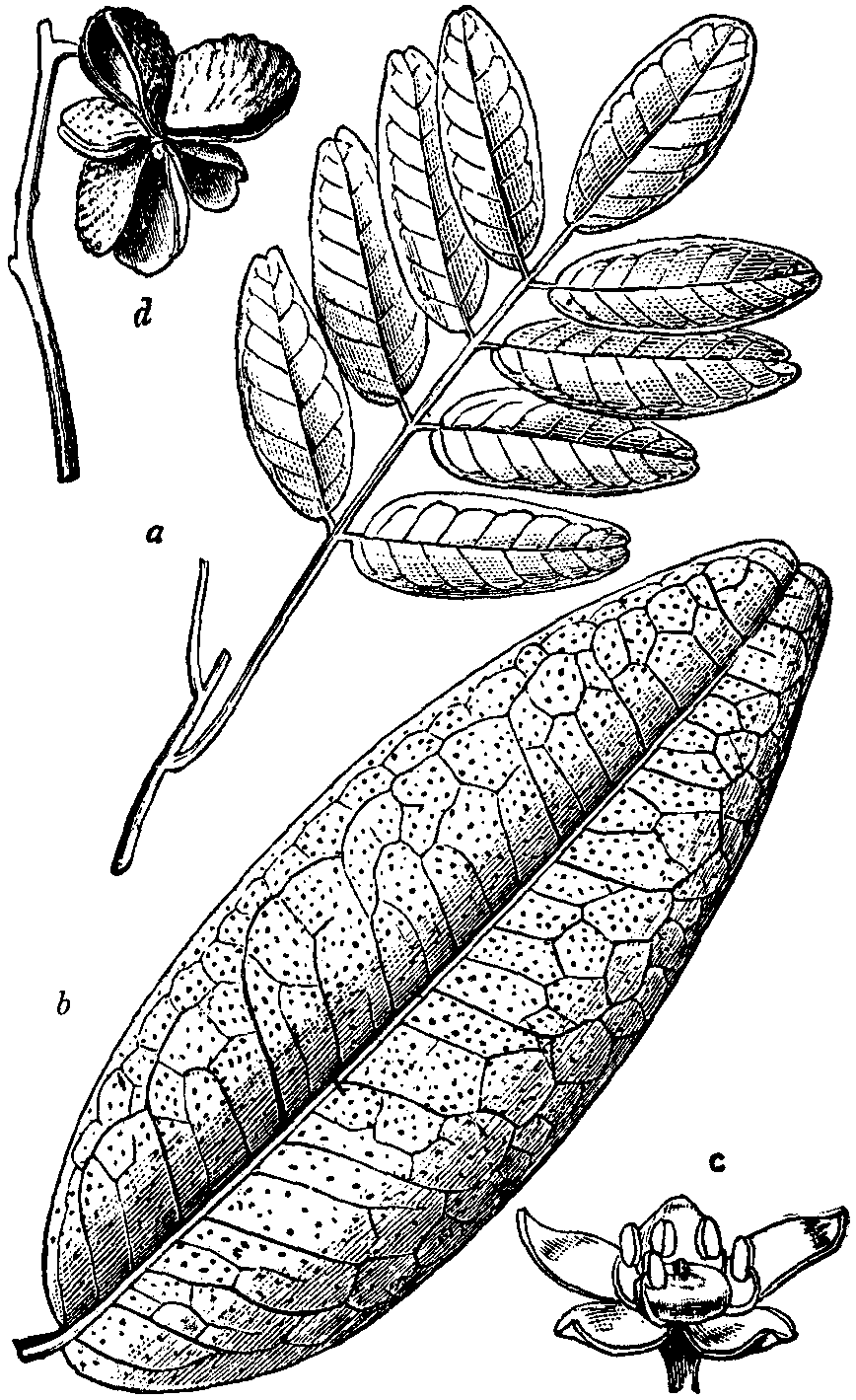
Pilocarpus jaborandi and Pilocarpus microphyllus are small Brazilian shrubs. The leaves are the source of pilocarpine, an alkaloid used in glaucoma eye drops.
The oil is produced in South America in very limited quantities.
(+)-Limonene and tridecanone chemotypes exist for P. jaborandi. Family Rutaceae.