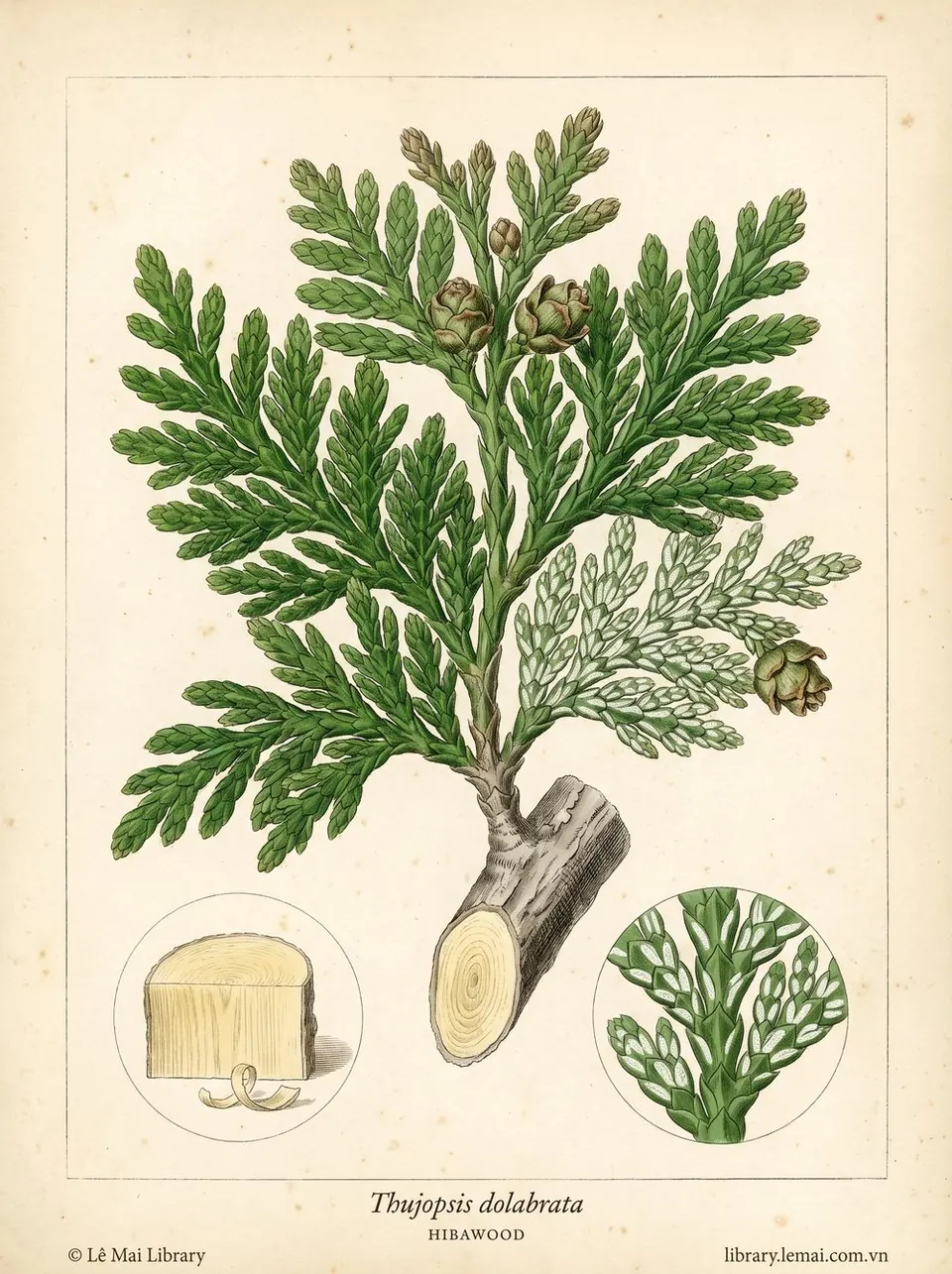
ヒバ
Hiba, gỗ - Cẩm tùng Nhật
Thujopsis dolabrata
Hiba arborvitae
Hiba wood essential oil is steam-distilled from the wood of Thujopsis dolabrata, a tree in the cypress family endemic to Japan and long used in traditional buildings, especially onsen bathhouses. Its main constituent is β-thujaplicin along with a large sesquiterpene fraction. No irritation or sensitization was seen at tested levels, and it suits bathrooms, room scents and soap.
Updated 6 Nov 2026 · Lê Mai Team
β-Thujaplicin shows reproductive toxicity at high doses in rat studies, 135 mg per kg caused fetal malformations, 45 mg per kg decreased fetal weight. No toxicity at 15 mg per kg.
No irritation or sensitization at tested levels. Limited detailed dermal data.
Contains no known carcinogens.
| β-Thujaplicin | Variable, main constituent |
| Sesquiterpenes | Major fraction |
Thujopsis dolabrata is a tree endemic to Japan. The Japanese name 'hiba' refers to both the tree and the wood.
The oil is steam-distilled from the wood. Hiba wood is naturally durable, used in traditional Japanese construction (particularly for onsen bathhouses).
Family Cupressaceae. Same family as hinoki and cypress.