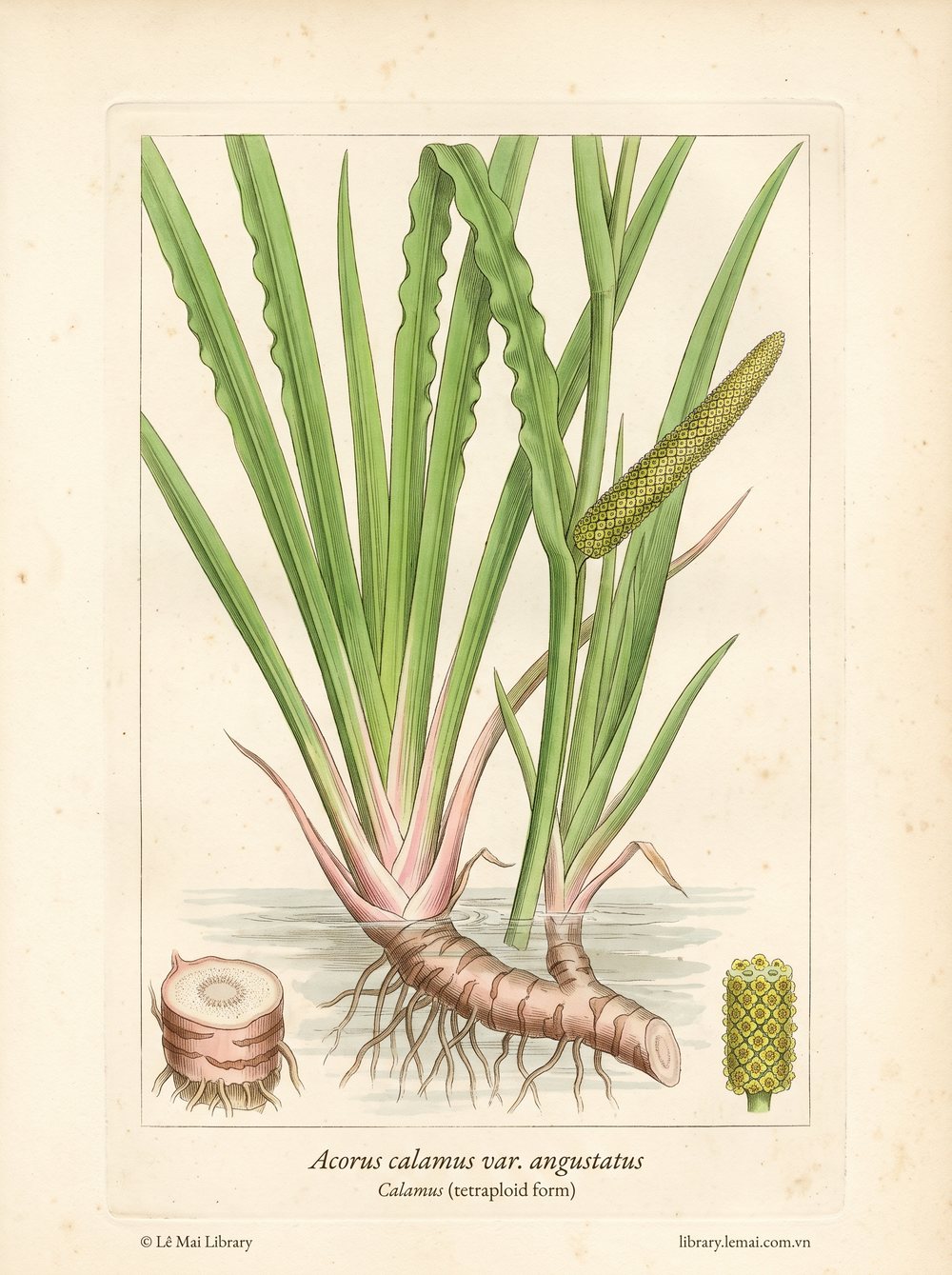
カラマス テトラプロイド
Thạch xương bồ, tứ bội
Acorus calamus var. angustatus
East Asian calamus, Jammu calamus, Sweet flag
Moderate toxicity. Hepatotoxic. Potentially carcinogenic.
Should not be taken orally.
Maximum dermal use level 0.2 percent based on 78.4 percent β-asarone, 6.8 percent α-asarone and 2 percent methyleugenol.
The FDA classifies Acorus calamus as one of 30 herbs listed as unsafe (Anon 1975).
| β-Asarone | 42.5 – 78.4 % |
| Isoeugenol | 2.3 – 25.0 % |
| Calamenene | 3.8 – 5.0 % |
| Calamene | 3.8 % |
| Calamol | 3.2 – 7.8 % |
| Asaronaldehyde | tr – 5.7 % |
| Methyl isoeugenol | tr – 2.8 % |
| Methyleugenol | tr – 2.0 % |
| α-Asarone | 1.3 – 6.8 % |
The tetraploid form is the most common commercial calamus oil, produced largely in India. β-Asarone content is the highest among the species' cytotypes.
Family Araceae. Var. angustatus per Bess. classification.
Rat studies show malignant duodenal tumors after 59 weeks of dosing with Jammu calamus oil at doses as low as 25 mg per kg per day.
β-Asarone is banned in the US as a pharmaceutical ingredient. α-Asarone is permitted. IFRA prohibits asarone as a fragrance ingredient, and its level in consumer products containing calamus oil must not exceed 0.01 percent.