α-Asarone
(E)-2,4,5-Trimethoxy-1-(1-propenyl)benzene
(E)-Asarone · trans-Asarone
化学組成 · Constituent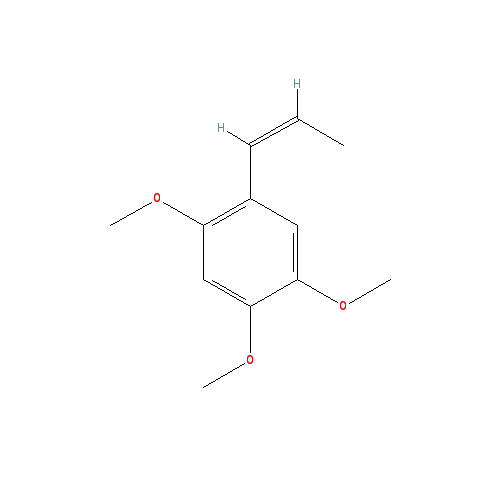
(E)-2,4,5-Trimethoxy-1-(1-propenyl)benzene
(E)-Asarone · trans-Asarone
化学組成 · Constituent
α-Asarone shows signals for neurotoxicity, reproductive toxicity, hepatotoxicity, genotoxicity and carcinogenicity. IFRA recommends it not be used as a fragrance ingredient and limits total asarone in calamus-containing products to 0.01 percent.
Acute toxicity. Acute oral LD50 in mice is 418 mg/kg, acute intraperitoneal LD50 is 310 mg/kg.
Neurological. Intraperitoneal 50 mg/kg in rats causes only mild convulsions and protects against metrazole-induced seizures. At 300 mg/kg, half of treated rats showed hindlimb clonic convulsions and loss of righting reflex.
Reproductive. Oral 60 mg/kg/day on gestation days 6–15 induced fetal malformations and reduced maternal weight gain. At 30 mg/kg, seminal vesicle weight decreased and post-implantation loss increased dose-dependently.
Liver. Micromolar exposure in vitro for 1–2 weeks causes morphological hepatocyte changes, fat accumulation and inhibition of protein synthesis.
Carcinogenicity. Four pre-weaning intraperitoneal injections increased hepatoma incidence in male mice. Estimated human carcinogenicity NOAEL is around 4 mg/kg. Applying a safety factor of 20, the daily safe dose is 0.15 mg/kg, corresponding to a 0.33 percent dermal maximum.
| Calamus (tetraploid form) | 1.3 – 6.8 % |
| Cubeb | 0.9 – 3.7 % |
The major metabolite of α-asarone in rabbits is 2,4,5-trimethoxycinnamic acid, which is non-toxic. A putative metabolite, α-asarone 1,2-oxide, is strongly mutagenic in the Ames test but represents only a minor pathway in humans.
In rats given intraperitoneal α-asarone, ninhydrin-positive substances appeared in urine; these may be phenylisopropylamines or amphetamines.
α-Asarone is a major constituent of calamus oil. Oral use of calamus is discouraged, and dermal use is strictly limited.
At low doses the compound has antioxidant activity, protecting rat neurons from amyloid-β damage in experimental studies.