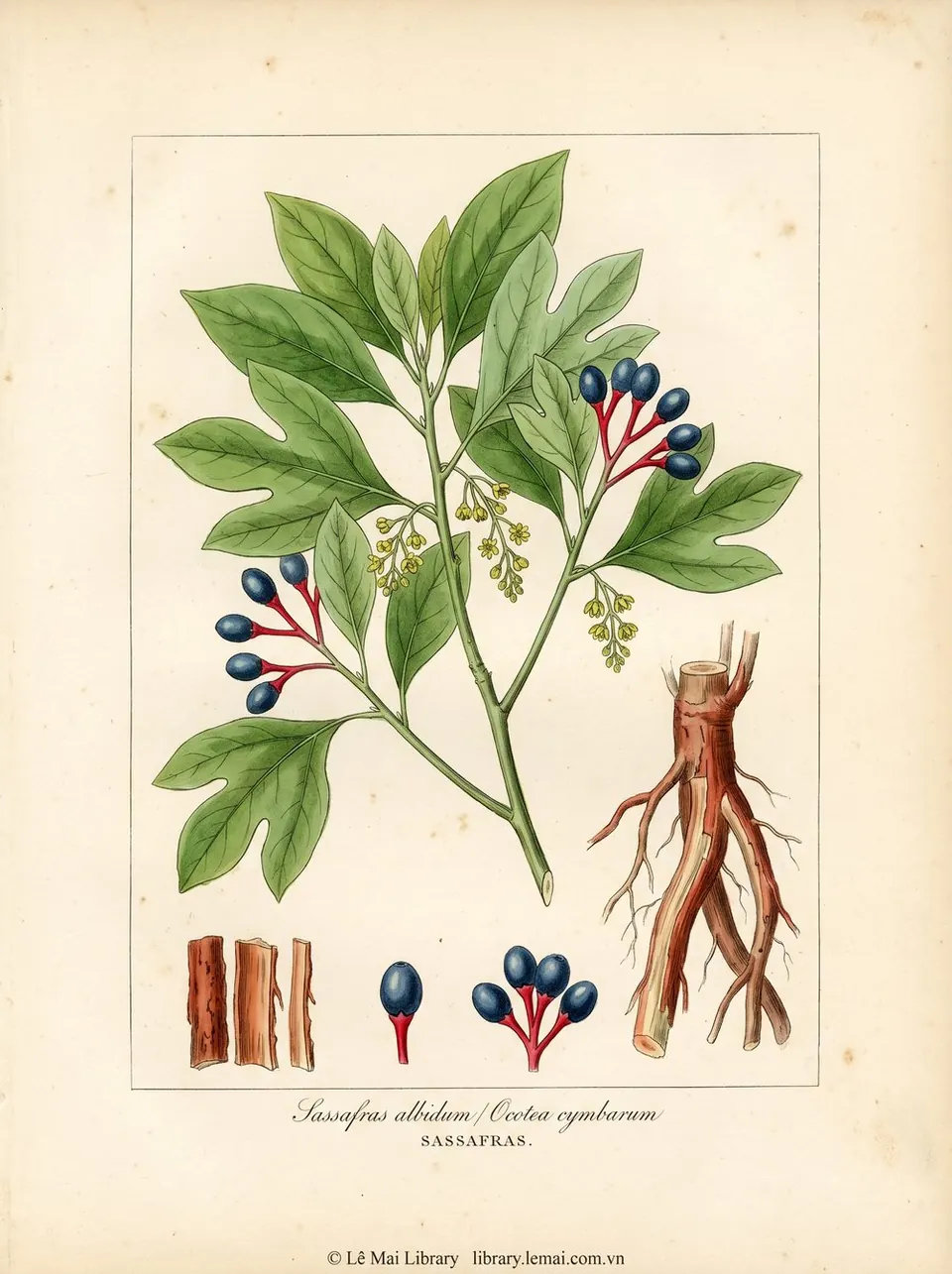
サッサフラス
Sassafras (Vỏ)
Sassafras albidum / Ocotea cymbarum
Brazilian sassafras
Sassafras oil is steam-distilled from the root bark and wood of Sassafras albidum from North America and Ocotea cymbarum from Brazil, both in the laurel family. Its main component is safrole (about 80 to 92%). This profile is listed mainly as a warning: IFRA bans it entirely in fragrance, the EU bans it in cosmetics, and it should not be used in any cosmetic product.
Updated 4 Nov 2026 · Lê Mai Team
Safrole comprises 80-90 percent. Safrole causes liver cancer in animals and likely in humans at high doses.
IFRA prohibits in fragrance entirely. EU prohibits in cosmetics. US FDA banned in food since 1960.
DO NOT use in any cosmetic application.
| Safrole | 80.0 – 92.0 % |
| Methyleugenol | 0.5 – 3.0 % |
Sassafras albidum (North America) and Ocotea cymbarum (Brazil) are the two main sources. Traditionally used in sassafras tea and root beer.
Family Lauraceae.
Listed primarily as a warning. Safrole is banned in food and cosmetics in most countries.
Also used as a chemical precursor for MDMA synthesis, strictly controlled in many countries.