マヌカ
Manuka
Leptospermum scoparium
New Zealand tea tree
Low risk of skin sensitization.
Contains no known carcinogens. β-Elemene has anticarcinogenic activity in vitro.
No data indicates hazard in pregnancy.
| Calamenene | 10.0 – 23.0 % |
| Leptospermone | 8.0 – 20.0 % |
| α-Selinene | 3.0 – 12.0 % |
| β-Selinene | 3.0 – 10.0 % |
| Flavesone | 3.0 – 8.0 % |
| Isoleptospermone | 2.0 – 6.0 % |
| δ-Cadinene | 2.0 – 5.0 % |
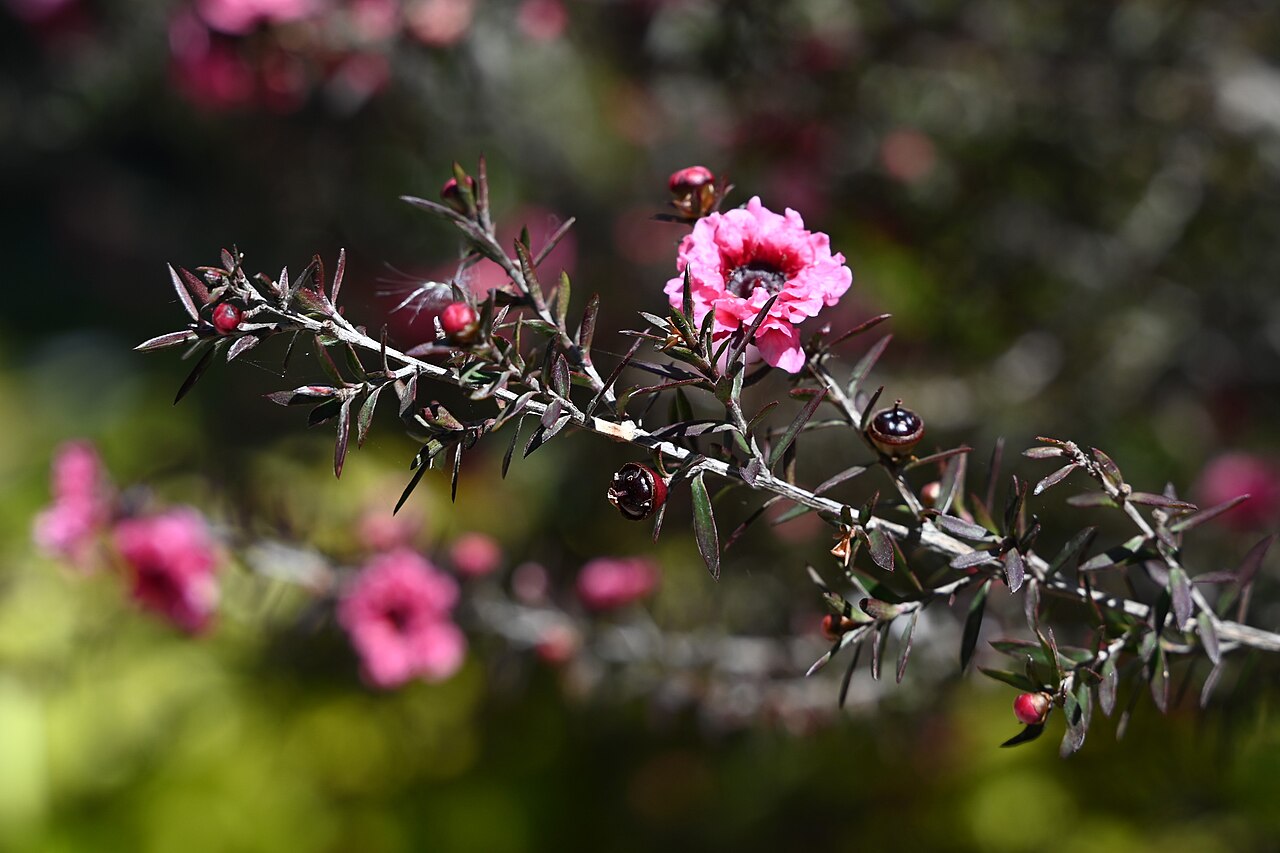
Leptospermum scoparium is a shrub endemic to New Zealand. Maori name 'manuka'.
Manuka and kanuka (covered under letter K) are two distinct species growing in the same region with similar aroma but markedly different chemistry. Manuka has characteristic β-triketones (leptospermone, flavesone, isoleptospermone), kanuka does not.
Famous manuka honey also comes from this plant, bees collect nectar from the flowers.
Family Myrtaceae, same family as eucalyptus and true tea tree (Melaleuca alternifolia).
Strong antibacterial activity from the triketones. Some studies show efficacy against MRSA and certain antibiotic-resistant bacterial strains.
Widely used in skin care products, particularly for problem skin.