Deertongue
ディアタン
Lưỡi nai
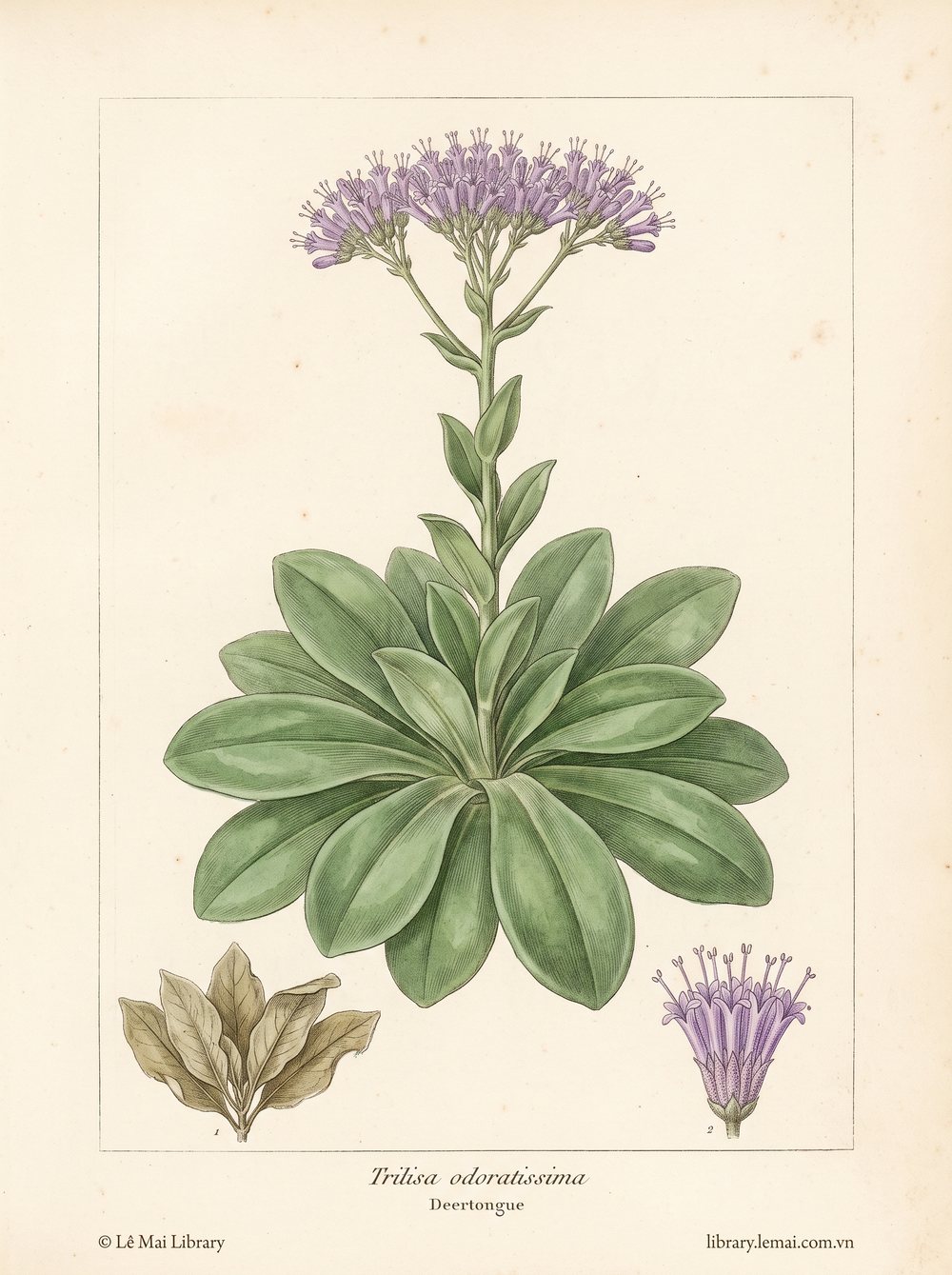
Trilisa odoratissima
Deer's tongue, Liatrix, Carphephorus odoratissimus, Liatris odoratissima
ディアタン
Lưỡi nai
Trilisa odoratissima
Deer's tongue, Liatrix, Carphephorus odoratissimus, Liatris odoratissima
Contains coumarin up to 25 percent.
Maximum adult oral dose 168 mg daily, based on 25 percent coumarin and an oral limit of 0.6 mg per kg per day.
Pure naturally-occurring coumarin is not a skin allergen, unlike impure synthetic coumarin.
High oral doses of coumarin are hepatotoxic in animals and in a very small percentage of humans. Dermal application is not hazardous per current data.
Coumarin was banned by the FDA for food use in the US in 1954.
| Coumarin | < 25.0 % |
Trilisa odoratissima is a perennial herb of the southeastern United States. The leaves develop a characteristic vanilla-coumarin scent when dried.
The absolute is solvent-extracted from the leaves. Family Asteraceae.
Deertongue has long been used as a tobacco flavoring. Also used in perfumery for tonka-vanilla-coumarinic notes.
The leaves contain 2,3-benzofuran, its presence in the absolute is not established. 2,3-Benzofuran caused DNA fragmentation in human kidney cells in vitro.
Coumarin is carcinogenic in rodents but anticarcinogenic in humans.