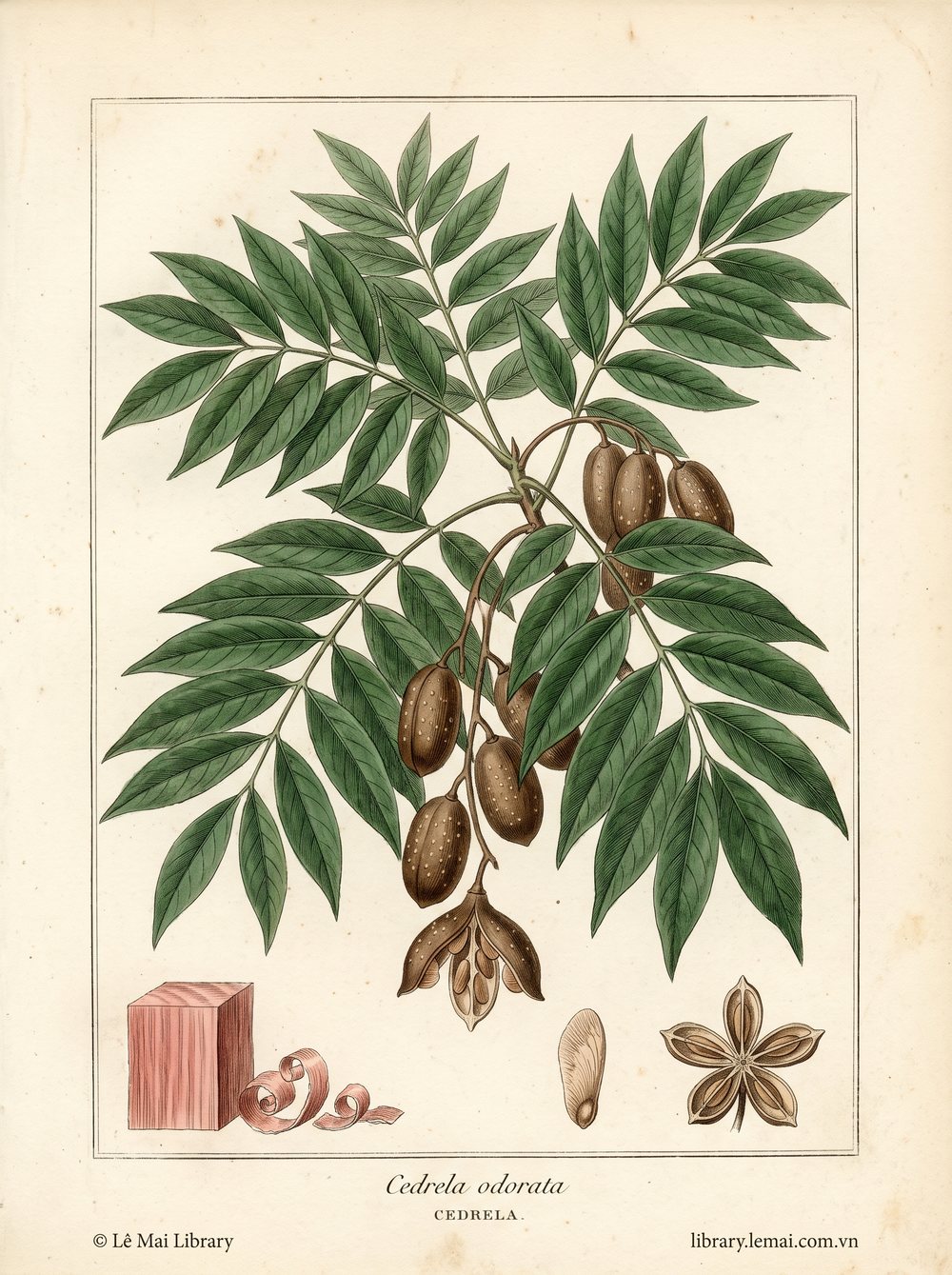
セドレラ
Cedrela
Cedrela odorata
Spanish cedar, West Indian cedar, Cigar-box cedar, Red cedar, Stinking mahogany, Cedrela mexicana
No specific contraindications in available data.
No information on dermal reactions or acute toxicity.
The oil contains no known carcinogens. Nerolidol and α-caryophyllene display anticarcinogenic activity.
| α-Copaene | 15.6 % |
| δ-Cadinene | 11.7 % |
| α-Cubebene | 8.0 % |
| (E)-Nerolidol | 8.0 % |
| β-Curcumene | 6.8 % |
| Calarene | 3.4 % |
| β-Cubebene | 3.2 % |
| Germacrene D | 2.6 % |
| α-Caryophyllene | 2.1 % |
| β-Farnesene | 1.8 % |
| epi-Cubenol | 1.4 % |
| Cadina-1,4-diene | 1.3 % |
| Caryophyllene | 1.2 % |
Cedrela odorata is a large tree of tropical Central and South America. The name 'cigar-box cedar' reflects the traditional use for cigar boxes, the naturally aromatic wood deters insects.
The oil is produced in Brazil. Family Meliaceae, same family as Cabralea cangerana and mahogany.
Despite the common name 'cedar', Cedrela is not in the same family as true cedarwoods. This is a mahogany.
Cedrela wood is listed by CITES under Appendix III (prevention of unsustainable or illegal exploitation). IUCN lists the species as threatened. Sourcing must be certified.