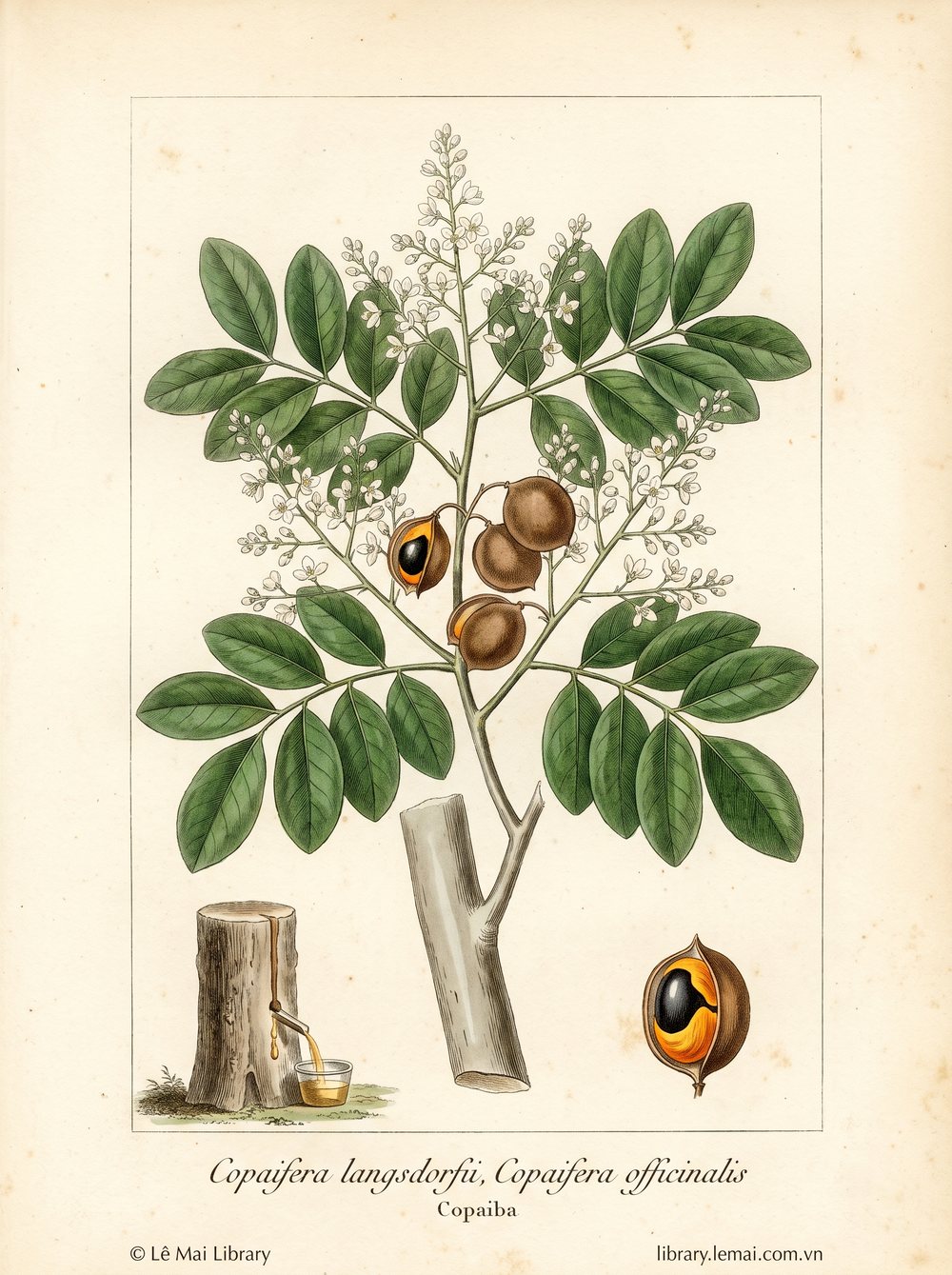
コパイバ
Copaiba
Copaifera langsdorfii, Copaifera officinalis
Copaiba balsam
No specific contraindications in available data.
No irritation or sensitization at 8 percent test level.
A reproductive study with a 2.5 percent copaiba oleoresin vaginal cream in pregnant rats showed no significant reproductive toxicity.
| β-Caryophyllene | Major |
| α-Caryophyllene | Variable |
| Sesquiterpenes | Major fraction |
Copaifera langsdorfii and Copaifera officinalis are large trees of the Amazon rainforest. The resin is collected by drilling into the trunk, one tree can yield 30 to 60 liters over its lifetime.
The oil is steam-distilled from the oleoresin. Family Fabaceae.
Brazilian copaiba has been used in Amazon traditional medicine for centuries, particularly for inflammatory skin conditions and cystitis.