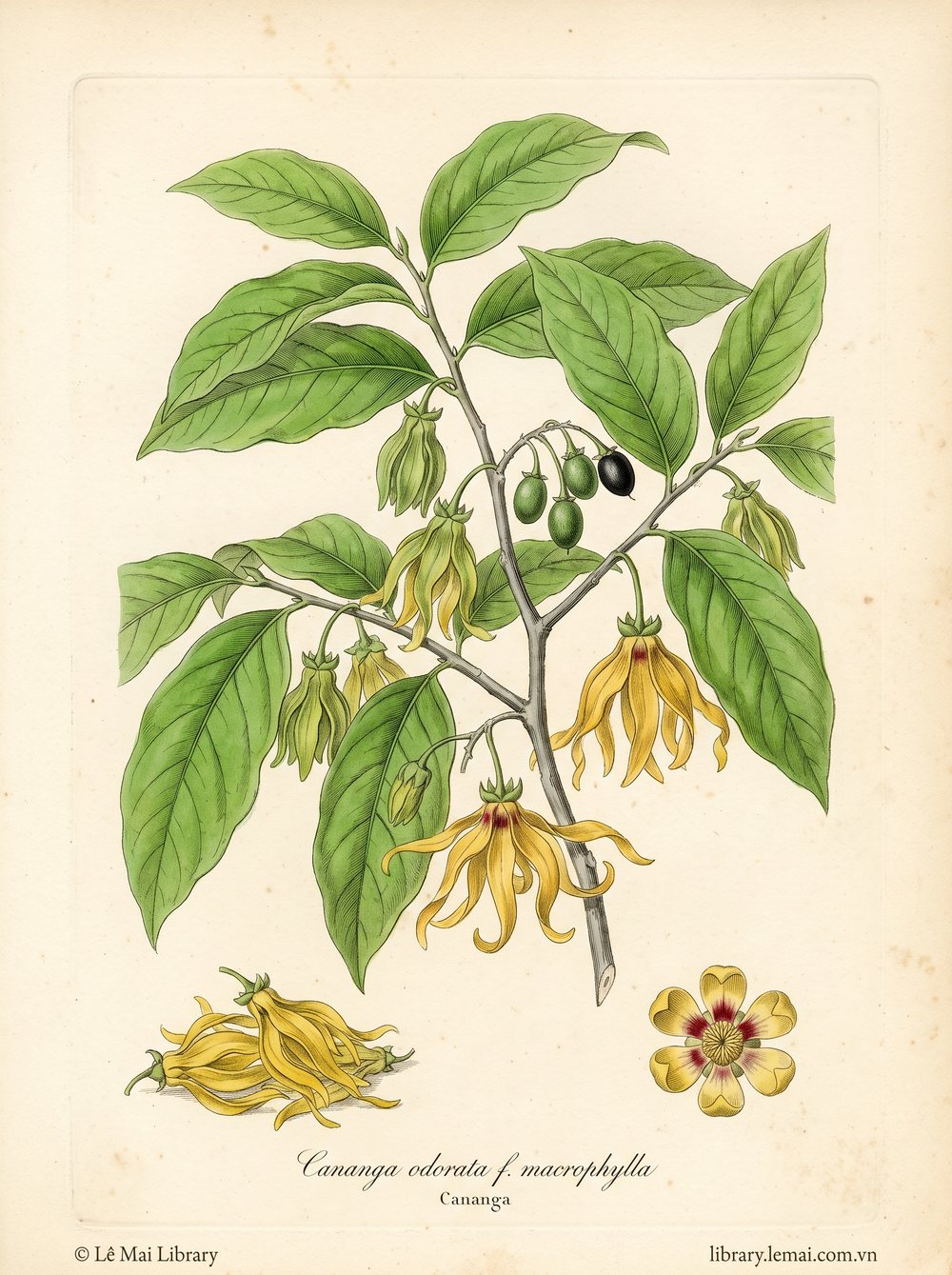
カナンガ
Ngọc lan ta
Cananga odorata f. macrophylla
Canangium odoratum f. macrophylla
No specific contraindications in available data.
Patch test positivity at 2 to 5 percent is very low (around 0.5 to 1 percent across dermatitis studies).
Contains methyleugenol at low levels, but β-caryophyllene and α-caryophyllene in the oil have anticarcinogenic activity that may counteract the risk.
| β-Caryophyllene | 38.2 % |
| α-Caryophyllene | 9.2 % |
| Germacrene D | 8.3 % |
Cananga odorata f. macrophylla is the macrophylla form of the tropical Asian ylang-ylang tree. Unlike ylang-ylang (same species, var. genuina), cananga oil is not fractionated during distillation.
Family Annonaceae. Same species as ylang-ylang but a different production process produces distinct chemistry and aroma.
Produced in Madagascar, Comoros, Indonesia.
Cananga carries a greener, woodier, less sweet character than ylang-ylang. Used in perfumery as a more affordable alternative to ylang-ylang in certain applications.