Benzoic acid
Benzenecarboxylic acid
化学組成 · Constituent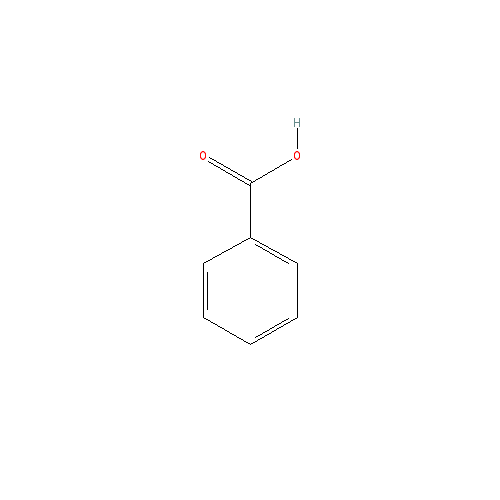
Benzenecarboxylic acid
化学組成 · Constituent
Benzoic acid is a weak acid that can be corrosive to tissues at high concentrations. Widely used as a food preservative, it is a dose-dependent irritant.
Skin. A 2 percent patch test on 25 volunteers showed no irritation. At 5 percent, 43 of 110 dermatitis patients (39 percent) had irritant reactions. In 200 volunteers without allergy history, the majority had immediate non-immune urticaria at high concentrations. The lowest urticarial dose was 0.05 percent in water.
Oral. Acute oral LD50 is 1.7–2.5 g/kg in rats, 2.0 g/kg in dogs and cats. Estimated adult human fatal dose is about 500 mg/kg.
Subchronic. Cats are sensitive to benzoic acid toxicity; 130–900 mg/kg/day causes CNS disturbance and can be fatal. Benzoic acid has been discontinued in cat food.
Reproductive. No estrogenic activity. A 510 mg/kg gavage dose on gestation day nine in rats did not increase resorption or malformations. Four-generation feeding at 375 or 750 mg/kg/day in rats showed no adverse effects.
Mutagenicity. Most assays show benzoic acid is non-mutagenic. Long-term rat NOAEL is 500 mg/kg/day. Daily 1,000 mg per person for 92 days was non-toxic in humans.
| Benzoin | 0.1 – 18.4 % |
| Peru balsam | 1.4 – 6.3 % |
| Tolu balsam | 2.5 % |
Benzoic acid is rapidly absorbed across species. The compound is primarily conjugated with glycine in the kidney to form hippuric acid, accounting for 40–100 percent of the dose in humans.
At higher doses, the compound is also conjugated with glucuronic acid. Benzoic acid crosses the placental and fetal blood–brain barriers in pregnant rats.
Benzoic acid is used to treat ringworm and as a food preservative. Its corrosive tendency requires care in cosmetic formulation.
Hereditary hepatic porphyria patients are a specifically vulnerable group.