Phenylethyl isothiocyanate
(2-Isothiocyanatoethyl)benzene
2-Phenylethyl isothiocyanate · β-Phenylethyl isothiocyanate · Phenethyl isothiocyanate · PEITC
化学組成 · Constituent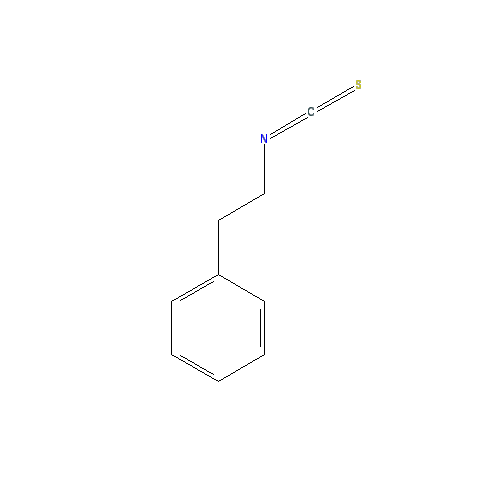
(2-Isothiocyanatoethyl)benzene
2-Phenylethyl isothiocyanate · β-Phenylethyl isothiocyanate · Phenethyl isothiocyanate · PEITC
化学組成 · Constituent
PEITC is only released when horseradish root or mustard seed is crushed. It is a strong irritant unsuitable for topical or cosmetic use.
Mutagenicity. PEITC caused chromosome aberrations in an Indian Muntjac cell line at concentrations potentially relevant to human dietary exposure. At 5 mM and above, PEITC itself caused DNA damage in human HepG2 hepatoma cells.
Cancer. Oral doses above 0.01 percent in male rats promoted urinary bladder carcinogenesis and more weakly promoted liver tumors. On the other hand, PEITC protected rodents against nitrosamine and NNK induced lung tumors and inhibited prostate, colon and lung cancers in numerous models. This dual activity makes the compound a promising candidate for cancer therapy but unsuitable for routine consumer exposure.
Mechanism. In cancer cells, PEITC induces apoptosis through multiple pathways including caspase-3 and p53 activation.
| Horseradish | 38.4 – 51.3 % |
| Mustard | 2.4 – 5.0 % |
PEITC is metabolized to mercaptopyruvic acid and the N-acetylcysteine conjugate. Metabolism differs in experimental animals according to their age.
PEITC is one of the most extensively studied isothiocyanates for its broad anticancer activity. Dietary exposure from Brassicaceae vegetables is far lower than concentrations found in horseradish oil.