Methyl anthranilate
Methyl 2-aminobenzoate
2-Aminobenzoic acid methyl ester
化学組成 · Constituent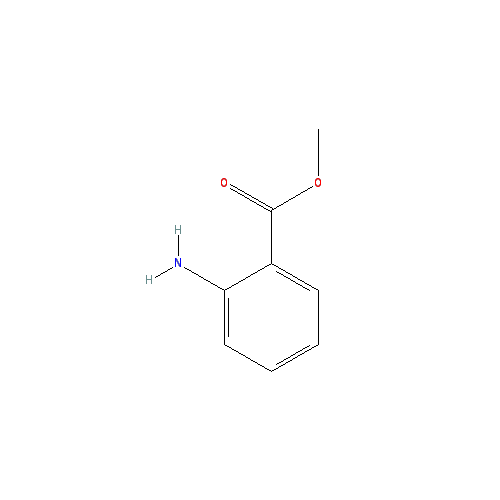
Methyl 2-aminobenzoate
2-Aminobenzoic acid methyl ester
化学組成 · Constituent
Methyl anthranilate is a common benzenoid ester in floral essential oils. Available data indicate low risk.
Skin. A 10 percent patch test on 25 volunteers caused no irritation and no sensitization.
Acute toxicity. Acute oral LD50 in rats is 2.91 g/kg, in mice 3.9 g/kg, in guinea pigs 2.78 g/kg.
Subchronic toxicity. In a 90-day rat feed study, 1,000 or 10,000 ppm methyl anthranilate produced no macroscopic effects. The high dose corresponds to 400 to 800 mg/kg body weight.
Mutagenicity. Non-mutagenic in the Ames test. Showed weak genotoxic activity in Chinese hamster cells.
Cancer. In a mouse study, ip injection of methyl anthranilate did not increase lung tumor incidence.
| Orange flower | 3.0 – 15.0 % |
| Champaca (orange) | 2.1 – 9.0 % |
| Jasmine sambac | 5.5 % |
| Orange flower water (absolute) | 3.0 % |
Methyl anthranilate fluoresces blue under UV light, a property useful for identifying its presence in floral oils. The compound gives the Concord grape note to the neroli aroma signature.