Linalool oxide
5-Ethenyltetrahydro-α,α,5-trimethyl-2-furanmethanol
Linalyl oxide · Linalool monoxide · Linalool epoxide · Epoxylinalool
化学組成 · Constituent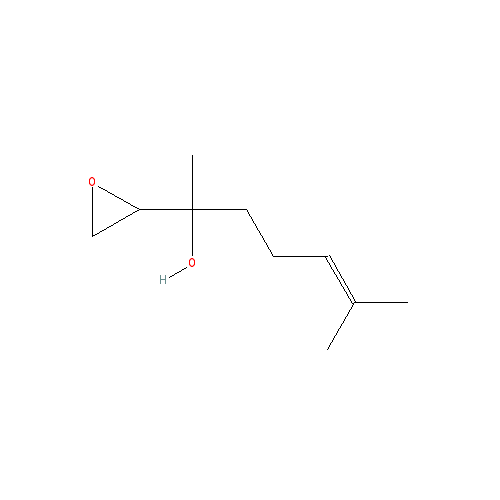
5-Ethenyltetrahydro-α,α,5-trimethyl-2-furanmethanol
Linalyl oxide · Linalool monoxide · Linalool epoxide · Epoxylinalool
化学組成 · Constituent
Linalool oxide is the oxidation product of linalool, present at low levels in some floral oils. Data indicate no irritation and no sensitization.
Skin. Undiluted linalool oxide was moderately to severely irritating to rabbit skin under 24-hour occlusion. An 8 percent patch test on 28 volunteers caused no irritation and no sensitization.
Acute toxicity. Acute oral LD50 in rats is 1.15 g/kg. Acute dermal LD50 in rabbits is 2.5 g/kg. Slight toxicity level.
| Osmanthus | 0.6 – 7.0 % |
| Mint (bergamot) | 1.2 – 1.7 % |
| Rosewood | 1.3 % |
| Linaloe wood | 1.0 – 2.0 % |
Linalool oxide exists in two main isomeric forms, (E)- and (Z)-, both occurring in osmanthus absolute at a few percent.
The compound forms naturally when linalool oxidizes. Commercial linalool material always contains a small fraction as impurity.