Cuminaldehyde
4-(1-Methylethyl)benzaldehyde
Cuminal · Cuminic aldehyde
化学組成 · Constituent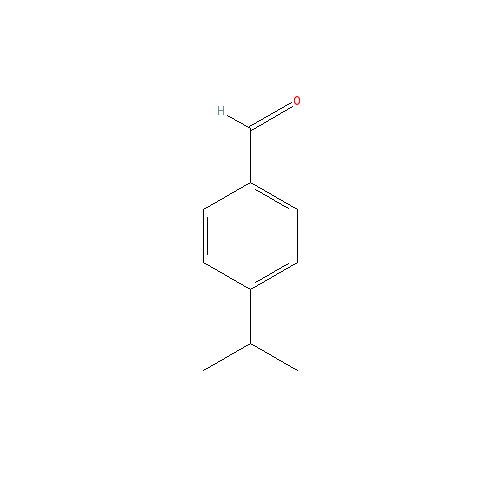
4-(1-Methylethyl)benzaldehyde
Cuminal · Cuminic aldehyde
化学組成 · Constituent
Cuminaldehyde is the major constituent of cumin oil and is a botanical marker for cumin seed.
Skin. A 4 percent patch test on 25 volunteers caused no irritation or sensitization. Undiluted application was non-irritant to mouse skin but irritating to rabbit skin. Among 179 cosmetic-suspect patients, three (1.7 percent) reacted to 15 percent.
Oral. Acute oral LD50 in rats is 1.39 g/kg; rabbit dermal LD50 is 2.8 g/kg.
Mutagenicity. Non-mutagenic in Salmonella TA98 and TA100. Non-genotoxic in Chinese hamster ovary cells.
Anticancer. Reduced spontaneous carcinoma incidence in mice by 45 percent at 5 mg per day.
| Cumin | 19.8 – 40.0 % |
| Eucalyptus (polybractea cryptone CT) | 3.3 % |
| Labrador tea | 1.6 % |
Oral cuminaldehyde is oxidized in rabbits to hydroxyl and carboxyl derivatives of p-isopropylbenzoic acid (cumic acid). A portion is reduced to p-cumyl alcohol.
Cuminaldehyde defines the characteristic aroma of cumin oil, one of the oldest spices used in Middle Eastern and Indian cuisines.