Acetophenone
1-Phenylethanone
Methyl phenyl ketone
化学組成 · Constituent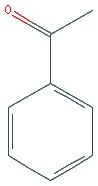
1-Phenylethanone
Methyl phenyl ketone
化学組成 · Constituent
Acetophenone occurs in essential oils only at very low concentrations. Available data does not indicate significant risk.
Skin. Human patch testing at 2 percent showed no irritation and no sensitization. Guinea pigs tested at 20 percent showed no sensitization.
Oral. Acute oral LD50 in rats is 3.2 g/kg, a high value typical of low-toxicity compounds. Rats fed at 1,000 to 10,000 ppm for 17 weeks showed no adverse effects.
Genotoxicity. Acetophenone was non-mutagenic in the Ames test.
| Cistus | 0 – 2.2 % |
| Orris | Trace |
Acetophenone has been extensively studied in animals. In rabbits and dogs it is metabolized through two parallel pathways. Reduction yields a secondary alcohol. Oxidation yields benzoic acid and hydroxylated derivatives.
Commercial acetophenone is produced synthetically at industrial scale for fragrance, pharmaceutical and agrochemical applications. It was historically used as a sedative.
The related compound benzophenone is used to block UV light in sunscreen products.