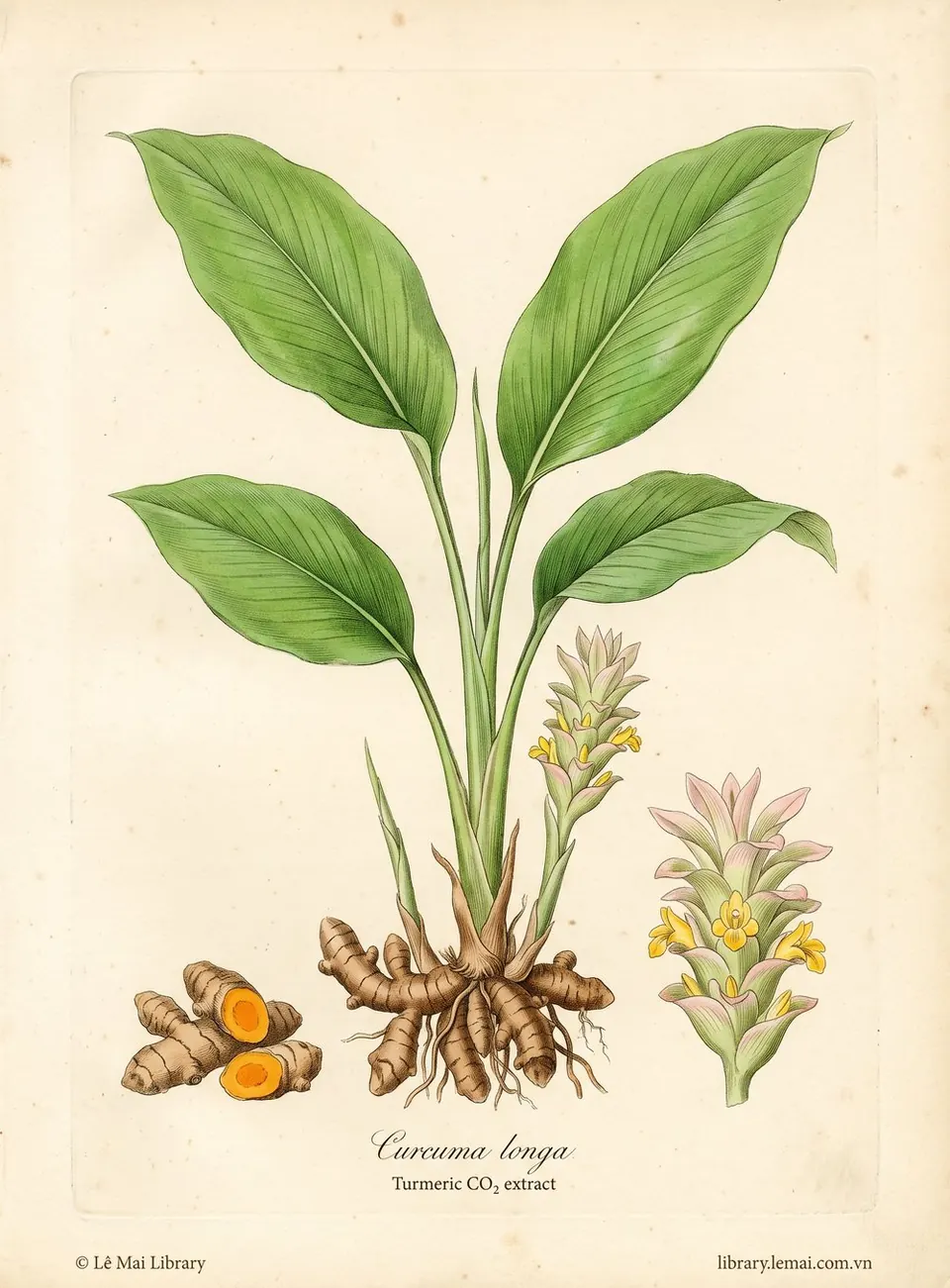
ターメリックCO2エキストラクト
Nghệ CO2 extract
Curcuma longa
Turmeric CO2 total, Turmeric CO2 select, Curcuma CO2
Turmeric CO2 extract is made by subcritical or supercritical CO2 extraction of the dried rhizome of Curcuma longa, a ginger-family plant grown in India, Vietnam and Indonesia. It smells of freshly sliced turmeric, ginger, earth and wood with a hint of orange, warm and dry; its main components are ar-turmerone and α-turmerone. The total grade contains yellow-orange curcuminoids that can stain skin, fabric and products.
Updated 4 Nov 2026 · Lê Mai Team
Freshly sliced turmeric, ginger, earth, wood, a hint of orange. Warm, dry, slightly bitter. The total extract is deep orange and rounder than the oil.
Turmeric CO2 extract has no dedicated standard in the IFRA 51 index.
The total extract contains curcuminoids, yellow-orange pigments that can stain skin, fabric and products. Store dark, sealed and cool.
| ar-Turmerone | major |
| α-Turmerone | major |
| β-Turmerone (curlone) | present |
| Curcuminoids (non-volatile) | present in total extract |
Curcuma longa is a perennial ginger-family herb grown for its rhizome in India, Bangladesh, Vietnam, Indonesia and elsewhere. India is the largest producer, consumer and exporter. Vietnam also grows turmeric.
Rhizomes are boiled or steamed, dried and ground. The odour comes from turmerones, sesquiterpene ketones characteristic of turmeric. The yellow colour comes from curcumin and other curcuminoids, which are non-volatile.
CO2 extraction uses compressed carbon dioxide as the solvent. Under subcritical conditions CO2 takes mainly the volatile fraction, giving a product called a select extract. Under supercritical conditions it also takes lipids and non-volatiles, giving a total extract. On depressurisation the CO2 evaporates completely and leaves no solvent residue.
The select extract is close to the oil, rich in turmerones and low in colour. The total extract adds curcuminoids and oil; it is deep orange and widely used in foods for colour and flavour.
In perfumery turmeric CO2 serves spicy, woody and earthy accords. It pairs with ginger, cardamom, vetiver and orange. The total grade is rarely used in fine fragrance because of colour.
The library has pages for turmeric rhizome oil and turmeric leaf. The CO2 extract is a separate form because it keeps heavier fractions and may carry pigment.
In soap the total extract can colour the bar yellow-orange, so it suits only where that colour is wanted. On evaluation the select extract shows fresh turmeric and ginger clearly; the total extract is warmer, earthier and less sharp.